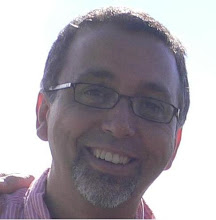
This weblog has been silent more often than not over the past 6 months. Much has happened around the world that is worthy of critical appraisal--Zimbabwe, Tibet, Burma...amongst others.
I hope that the weblog will resume normal service in the next little while. Please be patient.
Friday, July 11, 2008


Wednesday, April 16, 2008
the World Bank and poverty
According to the World Bank's website, 'at the heart of the World Bank’s work in more than 100 countries is the focus on poverty reduction. Almost one billion people live on less than $1 a day; 2.5 billion live on less than $2 a day. Beyond causing hunger and malnutrition, poverty makes people vulnerable to economic shocks, natural disasters, violence, and crime. They are often denied access to education, adequate health services, and clean water and sanitation.'
Excluding China, the number of people living on less than $1 a day has gone up since 1985. Excluding China, the number of billion living on less than $2 a day has gone up since 1985. This begs the question: if 'working for a world free from poverty' is at the heart of the World Bank's mission, why have the numbers of poor people increased in the past 20 years?
The people that work in the World Bank are not evil. They do not arrive at their office, in Washington, or in Hanoi, or in Maputo, and think 'How much poverty can I create today?' Indeed, the World Bank is full of well-meaning people who care passionately about poverty, who have learned a lot about the causes and consequences of poverty, and who have often worked very, very closely with poor people, in order to try and make the world a better place. I should know: many people I know have worked with, or still work for, the Bank, and they are not wicked people.
At issue, then, is how an institution full of well-meaning people can end up deepening the very phenomenon that they purport to want to remedy. How is it that the doctor ends up making the disease worse?
The answer lies in the institutional structure of the World Bank, and the career structure for those that work within it. The World Bank as an institution is dominated by representatives from the North, and, as Robert Wade of the London School of Economics has admirably shown in work that was published almost a decade ago, within those representatives, the role of the United States Department of the Treasury (the US finance ministry) is paramount. The US Treasury ultimately decides who becomes President of the World Bank. It has a disproportionate degree of influence in who assumes senior positions within the World Bank. Further, non-American Executive Directors at the Bank, who, along with the President, tend to set day-to-day policy and do pivotal things like approve loans, tend to understand the need to follow the lead of the United States in decision making. Thus, the Bank, which is staffed by a heterogeneous group of often very talented people, is an extremely hierarchical structure--almost Leninist in its design--in which those at the top make decisions in light of their belief system, and often (willingly) ignore good advice from those at lower levels of administration.
In terms of career structure, the World Bank tends to reward the orthodox. The World Bank is dominated by economists trained in the United States in neoclassical economics, which formally demonstrates the efficiency of free markets and private producers and the benefits of international trade and competition. People whose economic ideas stray from this agenda--people like Branko Milanovic and Joesph Stiglitz--have had a very hard time getting their ideas listened to, let alone accepted, and the message to the vast majority of the staff of the Bank is clear: don't upset the apple cart if you want to maintain the privileges that being a World Banker brings. Again, then, the career structure of the Bank is one that reinforces a pre-existing set of views, rather than challenging those views.
It is this combination of a hierarchical institutional structure and a career path that rewards orthodoxy over challenge which results in the World Bank clinging to a set of policy prescriptions that have, in essence, changed very little in 25 years and which have had a significant global impact, in that they have contributed to increasing the number of poor people in the world.
Excluding China, the number of people living on less than $1 a day has gone up since 1985. Excluding China, the number of billion living on less than $2 a day has gone up since 1985. This begs the question: if 'working for a world free from poverty' is at the heart of the World Bank's mission, why have the numbers of poor people increased in the past 20 years?
The people that work in the World Bank are not evil. They do not arrive at their office, in Washington, or in Hanoi, or in Maputo, and think 'How much poverty can I create today?' Indeed, the World Bank is full of well-meaning people who care passionately about poverty, who have learned a lot about the causes and consequences of poverty, and who have often worked very, very closely with poor people, in order to try and make the world a better place. I should know: many people I know have worked with, or still work for, the Bank, and they are not wicked people.
At issue, then, is how an institution full of well-meaning people can end up deepening the very phenomenon that they purport to want to remedy. How is it that the doctor ends up making the disease worse?
The answer lies in the institutional structure of the World Bank, and the career structure for those that work within it. The World Bank as an institution is dominated by representatives from the North, and, as Robert Wade of the London School of Economics has admirably shown in work that was published almost a decade ago, within those representatives, the role of the United States Department of the Treasury (the US finance ministry) is paramount. The US Treasury ultimately decides who becomes President of the World Bank. It has a disproportionate degree of influence in who assumes senior positions within the World Bank. Further, non-American Executive Directors at the Bank, who, along with the President, tend to set day-to-day policy and do pivotal things like approve loans, tend to understand the need to follow the lead of the United States in decision making. Thus, the Bank, which is staffed by a heterogeneous group of often very talented people, is an extremely hierarchical structure--almost Leninist in its design--in which those at the top make decisions in light of their belief system, and often (willingly) ignore good advice from those at lower levels of administration.
In terms of career structure, the World Bank tends to reward the orthodox. The World Bank is dominated by economists trained in the United States in neoclassical economics, which formally demonstrates the efficiency of free markets and private producers and the benefits of international trade and competition. People whose economic ideas stray from this agenda--people like Branko Milanovic and Joesph Stiglitz--have had a very hard time getting their ideas listened to, let alone accepted, and the message to the vast majority of the staff of the Bank is clear: don't upset the apple cart if you want to maintain the privileges that being a World Banker brings. Again, then, the career structure of the Bank is one that reinforces a pre-existing set of views, rather than challenging those views.
It is this combination of a hierarchical institutional structure and a career path that rewards orthodoxy over challenge which results in the World Bank clinging to a set of policy prescriptions that have, in essence, changed very little in 25 years and which have had a significant global impact, in that they have contributed to increasing the number of poor people in the world.
goodbye Rick Hillier
This weblog has been very quiet, for several months. The pressures of work have not allowed me to follow up several issues on which I have wanted to comment--the protests in Tibet, the elections in Zimbabwe, and the character of the World Bank and IMF, to name three. However, I have been roused out of my silence by the news yesterday that General Rick Hillier, Canada's Chief of Defence Staff since February 2005, is retiring.
Rick Hillier has been portrayed in the press as a straight-talking soldier concerned above all with the troops under his command, who has waged a struggle for the hearts and minds of Canadians to support the military while it undertakes its twice-extended mission in Khandahar. I have no reason to doubt the sincerity of Hillier's beliefs, but I do have reason to question them.
When Hillier became Chief of Defence Staff, Canada had 600 soldiers stationed in Kabul with NATO's International Security Assistance Force, known as ISAF. These soldiers were undertaking a fairly 'classic' Canadian international military operation: peacekeeping in the comparative safety of Kabul. Peacekeeping was what Canada's military, globally, was known for up until the appointment of Hillier. With that appointment, though, things changed.
As Janice Gross Stein and Eugene Lang convincingly demonstrate in their excellent The Unexpected War: Canada in Kandahar, it was Hillier who, in the wake of the Chretien government's opposition to the Iraq war and the Martin government's withdrawal from the United States' missile defence program, recognized an opportunity to placate the United States while at the same time fundamentally transforming Canada's military. That opportunity was the 'mission' in Kandahar, an infinitely more demanding assignment than Canada had undertaken in Kabul. The Martin government's agreement to send Canadian soldiers to Kandahar was basically Hillier's doing; those in the government had little idea about Afghanistan or Kandahar. They agreed because the 'mission' eased pressure on the United States military, both in Afghanistan but also in Iraq, and in so doing pleased those who had been unhappy with several foreign policy decisions that directly affected the United States.
It also did something else, however: Kandahar was and is a war zone. It is not a place where peacekeepers try to keep warring parties apart and maintain order. It is a place where order must be imposed through the use of force, because local warlords oppose the intervention in Afghanistan. As a result, Canadian forces have been heavily engaged, for the first time since the Korean War, in offensive military operations against opponents that the media dubs 'the Taliban' but whom, as Graeme Smith of The Globe and Mail has so ably demonstrated, are not the remnants of the former government of Afghanistan as rather an assortment of those opposed to Western military involvement in Kandahar. At best, the Pashtuns fighting the Canadians might be termed 'neo-Taliban'.
The point, then, is that Hillier has transformed the Canadian military from a peacekeeping force into a war-fighting machine. This has, no doubt, greatly increased the cohesion of the military themselves, and has also increased the recognition of the military amongst ordinary Canadians. It has, however, also led to the deaths of 82 Canadian soldiers and a significant reinforcement of opposition in Kandahar to the Canadian presence (many of whom are mistaken for American soldiers), which now totals 2500 soldiers. Most importantly, however, while the 'mission' has to terminate in 2011, Canada--and NATO--has no strategy in place to deal with the possibility that the country will remain largely hostile for the foreseeable future. This is a conflict that cannot be won militarily, as the history of Afghanistan shows, and will be difficult to win politically, given widespread views that the government of Hamid Karzai is not a national government but, at best, a weak Kabul government. Hillier has led Canada into what is, in essence, a no-win scenario; and for this, his tenure as Chief of Defence Staff will probably, over time, be viewed much more negatively than is currently the case.
Rick Hillier has been portrayed in the press as a straight-talking soldier concerned above all with the troops under his command, who has waged a struggle for the hearts and minds of Canadians to support the military while it undertakes its twice-extended mission in Khandahar. I have no reason to doubt the sincerity of Hillier's beliefs, but I do have reason to question them.
When Hillier became Chief of Defence Staff, Canada had 600 soldiers stationed in Kabul with NATO's International Security Assistance Force, known as ISAF. These soldiers were undertaking a fairly 'classic' Canadian international military operation: peacekeeping in the comparative safety of Kabul. Peacekeeping was what Canada's military, globally, was known for up until the appointment of Hillier. With that appointment, though, things changed.
As Janice Gross Stein and Eugene Lang convincingly demonstrate in their excellent The Unexpected War: Canada in Kandahar, it was Hillier who, in the wake of the Chretien government's opposition to the Iraq war and the Martin government's withdrawal from the United States' missile defence program, recognized an opportunity to placate the United States while at the same time fundamentally transforming Canada's military. That opportunity was the 'mission' in Kandahar, an infinitely more demanding assignment than Canada had undertaken in Kabul. The Martin government's agreement to send Canadian soldiers to Kandahar was basically Hillier's doing; those in the government had little idea about Afghanistan or Kandahar. They agreed because the 'mission' eased pressure on the United States military, both in Afghanistan but also in Iraq, and in so doing pleased those who had been unhappy with several foreign policy decisions that directly affected the United States.
It also did something else, however: Kandahar was and is a war zone. It is not a place where peacekeepers try to keep warring parties apart and maintain order. It is a place where order must be imposed through the use of force, because local warlords oppose the intervention in Afghanistan. As a result, Canadian forces have been heavily engaged, for the first time since the Korean War, in offensive military operations against opponents that the media dubs 'the Taliban' but whom, as Graeme Smith of The Globe and Mail has so ably demonstrated, are not the remnants of the former government of Afghanistan as rather an assortment of those opposed to Western military involvement in Kandahar. At best, the Pashtuns fighting the Canadians might be termed 'neo-Taliban'.
The point, then, is that Hillier has transformed the Canadian military from a peacekeeping force into a war-fighting machine. This has, no doubt, greatly increased the cohesion of the military themselves, and has also increased the recognition of the military amongst ordinary Canadians. It has, however, also led to the deaths of 82 Canadian soldiers and a significant reinforcement of opposition in Kandahar to the Canadian presence (many of whom are mistaken for American soldiers), which now totals 2500 soldiers. Most importantly, however, while the 'mission' has to terminate in 2011, Canada--and NATO--has no strategy in place to deal with the possibility that the country will remain largely hostile for the foreseeable future. This is a conflict that cannot be won militarily, as the history of Afghanistan shows, and will be difficult to win politically, given widespread views that the government of Hamid Karzai is not a national government but, at best, a weak Kabul government. Hillier has led Canada into what is, in essence, a no-win scenario; and for this, his tenure as Chief of Defence Staff will probably, over time, be viewed much more negatively than is currently the case.
Thursday, April 3, 2008
recent activities, winter 2008
The new year promises to be a busy one. My teaching a Trent University will, of course, dominate a lot of my time between now and late April. Both the courses I teach, Human inequality in global perspective and Agrarian change and the global politics of food, are going well--the fall term results were as I would have hoped them to be.
Editorial work on my next book, again co-edited with C Kay, and entitled Peasants and Globalization: Political Economy, Rural Transformation and the Agrarian Question will (finally) be completed in January; I will be glad to put that project to bed.
A review essay on Sardar Sarovar, entitled 'State, society and Sardar Sarovar', and dedicated to the memory of Ranjit Diwedi, will finally be published by Contemporary South Asia in March, as will my book chapter on gender relations and macroeconomics. Both have been in the pipeline for some time. Work on a book chapter on gender relations and the macroeconomics of the Millennium Development Goals is also almost complete. I will start work on a review essay on the World Bank's World Development Report 2008: Agriculture for Development, a note on landlessness in Vietnam's agrarian transition for the Journal of Agrarian Change, and catch up with two (somewhat delayed) book reviews for Development and Change. Finally, I will be giving seminars in the next 3 months at Queen's University in Kingston as well as at Trent University.
In terms of professional activities, I will be, as part of a team of external evaluators, be undertaking a review of York University's International Development Studies Program; that work will be done in January. I have also been asked, in my capacity as Co-Chair of the Editorial Board of the Canadian Journal of Development Studies, to review, along with other colleagues, the publishing model of the Journal, with an eye towards concluding deliberations on the future way in which the Journal will be published.
Clearly, it will be, as usual, a very busy few months.Monday, January 7, 2008
revenge of the slums: the aftermath of the elections in Kenya
The events that have swept
The use of ethnicity as a means of politically organizing the subordinate, for the benefit of the ruling elite, and the use of repression as a means to sustain an elite privilege that is predicated upon the use of ethnicity, cannot however hide the fact that Kenya is a deeply stratified society. Class dynamics must be understood if the political economy of recent events are to be interpreted. Dominant political groups have used politics as a means of plundering the country, and thus enriching themselves, turning themselves into a indigenous ruling class. Kleptocracy runs deep in this elite. A principal exhibit: the Goldenberg scandal of the early 1990s, which witnessed, possibly, 10 % of the country’s GDP being extorted by members of the elite through questionable exports of gold and diamonds, a scam for which no member of the ruling class has ever been prosecuted. A second exhibit: the Anglo Leasing affair, in which government money was paid to companies that did not exist, or was paid to companies at dramatically over-inflated prices, diverting millions of dollars to shady businessmen who in turn passed on money to corrupt senior politicians. Repression and kleptocracy have been tolerated by the West, as
No wonder the citizens of
That this cabal would seek to rig the presidential elections is thus not surprising, although the blatant character of it has shocked many, not least of all me. As is clear, the outcome of the parliamentary elections was a disaster for the President. The President’s Party of National Unity, which includes remnants of Moi’s former Kenyan African National Union party, lost the vote, and half the President’s cabinet, including some very nasty people such as Nicholas Biwott, Moody Awori, and Gideon Moi, son of the former President, lost their seats. Kibaki and his entourage therefore put into play a long-standing plan to rig the Presidential election results by delaying the results from
Raila Odinga, the Orange Democratic Movement’s (ODM) candidate for president, and a long-standing opponent of the one-party rule of former President Moi, expected the vote to be rigged; indeed, the ODM engaged in some irregularities as well. Reliable accounts suggest that the ODM had a pre-existing plan to react to the announcement of a Kibaki victory by calling on a campaign of civil disobedience. Thus, on the ground, there has been some encouragement of young hoodlums rampaging through the streets of Kisumu, Mombassa, Eldoret and the
The venality of
Indeed, what that repression would entail has already been witnessed in the past few days; the security services have been responsible for a significant share of the violence. What is not clear, however, is how ordinary Kenyans would respond. Previously, politically-motivated ethnic conflict occurred in rural areas removed from the capital. What is now different is that conflict has moved full-scale into the slums of
Friday, December 28, 2007
the assassination of Benazir Bhutto
The assassination of Benazir Bhutto yesterday has left me, momentarily, stunned. Although I was highly critical of Bhutto, even before she first became Prime Minister of Pakistan following the still-unsolved death of President Zia ul-Haq in 1988, as evidenced by my review of the first edition of her autobiography Daughter of the East, I am nonetheless shocked by her death. I must confess that I never believed that she was risking so much when she returned to Pakistan earlier this year after a long exile; I never believed that the risk of assassination was real. The fact, then, that a gunman could get a few metres in front of her Land Cruiser and fire directly at her indicates a remarkable degree of personal courage that I did not ascribe to her, as well the likely complicity of some elements within the Pakistani state in her assassination.
All day today I have been trying to figure out: where does responsibility lie? It seems to me that the reports of Rory McCarthy and Jason Burke of The Guardian offer the clearest way through the possible list of suspects. That list boils down to 4:
1. Militant Islamists: the very way in which the attack was carried out--death by shooting and a suicide bombing in a public place with many resulting casualties--makes militant Islamists a clear suspect. Note here that suggesting that militant Islamists may have been involved does not in any way suggest a role for al Qaeda. There have been several groups in Pakistan that have threatened to kill Benazir Bhutto, and many more that may have wanted to do so but whom have not articulated this aim. Bhutto's role as a female politician in a very conservative society, leading a secular, notionally social-democratic, political party, and with close and strong ties to the US state, all made her a particular target for that small minority of militant Islamists that espoused violence, and who have been allowed to prosper in Pakisan, often under the tutelage of the state, since the late 1970s. The roots of militant Islam in Pakistan are comparatively recent, dating back to the Islamicization policies practised by Zia ul-Haq from the late 1970s, the war against the Soviet Union in Afghanistan in the 1980s, and the rise of the Taliban in 2 short years in the mid 1990s thanks to the support of the Pakisanti state (and in particular its security apparatus, the ISI). However, in recent years the regime of Pervez Musharraf, which has sought to be a key ally of the US, has pandered to militant Islamist elements, and has, in the provinces, at times, relied upon their support, despite his own supposed 'liberalism'. It has been a pathologically contradictory political alignment, whose explosive elements have been seen this year in the assault on the Lal Masjid in the heart of Islamabad. It could well be responsible for the assassination.
2. The military: Bhutto did a deal with the military when she returned to Pakistan earlier in the year. Upon her return, however, there was, of course, a major assassination attempt on her life, one which killed scores of her supporters, and which required a huge breach of security, as did her assassination. However, saying the military might have been behind the assassination is not the same as saying Musharraf might be behind it. He has clearly very little to gain, and much to lose, by this assassination. Rather, Bhutto herself, prior to the 18 October assassination attempt in Karachi, suggested that elements within the military, closet supporters of former President Zia, sustained by elements within the ISI, together wanted her dead. No doubt, there were many in the ranks of the military who did indeed view Bhutto as a threat. The 'deep state' in Pakistan is real, although it is not understood; and it could have been responsible. Again, as I already noted, there was a major security failure that allowed the assassination to take place; this suggests some complicity within some elements of the state.
3. Political opponents: The political use of murder is extremely widespread in Pakistan, and is used by those in power and those outside but seeking power. Bhutto's relationship with longtime rival Nawaz Sharif had always been tense. Sharif rose politically during the regime of Zia ul-Haq; as a consequence, he was never forgiven by Bhutto, because Zia had ordered the hanging of Bhutto's father, Zulfikar Ali Bhutto, the founder of the Pakistan Peoples Party (PPP) which Benazir Bhutto led since the mid 1980s. While it is unlikely that Sharif himself could be involved, it is not beyond the realm of possibility that militant supporters might have felt that assassination was the best way of preventing a PPP victory in the forthcoming elections--although these may now be cancelled because of the assassination.
4. A combination of these: The killing of Zia has never been explained. Pakistan lacks the capacity to mount a full and complete investigation of the assassination of Bhutto, and thus it too may never be explained. Moreover, elements within the deep state might want to prevent such an investigation, even if they had nothing to do with the assassination, because it would reveal far too much of their behind-the-scenes power in contemporary Pakistan. Thus, I believe it is likely that the truth will never be known.
Having said that, Jason Burke has reminded us of a previous attempt on Bhutto's life: not the one on 18 October of this year, but one in the early 1990s. Then, Ramzi Yousef, who is now in prison in the US for the first attempt to blow up the World Trade Center, tried to assasinate Bhutto. The attempt was financed by money from outside Pakistan, coordinated by senior Islamist militants in the Gulf, and used local criminal elements and a local Afghan hardline commander with Saudi Arabian links. Throw into this volatile combination an element of the deep state, and a plausible, even if probably partial, explanation for the assassination begins to emerge. However, it is an explanation that will only ever be a theory.
I first met Benazir Bhutto in the mid 1980s, when she was in her early 30s, and when she was seeking to galvanize support for the PPP as it led the struggle against the military regime of Zia ul-Haq. She was an impressive figure, a reasonable speaker, but, unlike her father, not a politician that espoused a vision. Her politics had little depth to them; they were the politics of rhetoric, as I stressed all those years ago in my review of her autobiography. That was why, when corruption allegations against her and her husband, Asif Ali Zardari, emerged, particulary in the mid 1990s, I could believe them, and quite easily, despite the fact that she did not need the money, as she was from a hugely privileged background: the Sindhi feudal elite.
That Bhutto was a member of the Pakistani ruling class was amply demonstrated during her two terms as Prime Minister. She was deeply disappointing, doing nothing to challenge the deep state, doing nothing to question the culture of corruption that pervades the Pakistani ruling elite, and, most importantly, doing little to challenge the profound social inequality and pervades Pakistan, one of the most unequal and inegalitarian societies I have experienced. Her politics were opportunistic to the core, and in this she demonstrated the venality that pervades South Asian politics. Indeed, this was witnessed only this year, in the prolonged machinations between Bhutto and Musharraf, machinations that had nothing to do with principal and everything to do with trying to divide the spoils of power.
Having said that, though, she had made small differences to the lives of the Western-educated elite in Islamabad and Karachi. The one thing that was notable about Bhutto's Pakistan, as opposed to Zia's Pakistan, was that it was more liberal: the press was freer, women were freer, the country was not as oppressive as it had been--although it was still a very conservative place. Indeed, in this sense, Musharraf's Pakistan is a logical continuation of Bhutto's, which is perhaps one reason why the US was so keen to forge a partnership between the two.
That partnership could not have worked, because it reflected the needs of the Pakistani ruling classes, and not the Pakistani people. The PPP that Bhutto led was one that was founded by her father to meet the aspirations of the people: of workers, of students, and, most especially, of peasants. That PPP was the only mass popular movement that Pakistan has known. It was the people's party, a party against the elite, and in favour of social justice. Pakistan desperately needs this kind of mass-based political party. The PPP needs to be rebuilt, or a new, broadly-based party that represents the aspirations of the subordinate built: a modern, democratic organization defending the social, economic, political and human rights of Pakistan's people. If the assassination of Benazir Bhutto, who dominated the PPP, leads to these kinds of changes in the PPP, then benefit could come from her death. Sadly, though, my experience of Pakistan over the last 25 years suggests that this will not happen.
All day today I have been trying to figure out: where does responsibility lie? It seems to me that the reports of Rory McCarthy and Jason Burke of The Guardian offer the clearest way through the possible list of suspects. That list boils down to 4:
1. Militant Islamists: the very way in which the attack was carried out--death by shooting and a suicide bombing in a public place with many resulting casualties--makes militant Islamists a clear suspect. Note here that suggesting that militant Islamists may have been involved does not in any way suggest a role for al Qaeda. There have been several groups in Pakistan that have threatened to kill Benazir Bhutto, and many more that may have wanted to do so but whom have not articulated this aim. Bhutto's role as a female politician in a very conservative society, leading a secular, notionally social-democratic, political party, and with close and strong ties to the US state, all made her a particular target for that small minority of militant Islamists that espoused violence, and who have been allowed to prosper in Pakisan, often under the tutelage of the state, since the late 1970s. The roots of militant Islam in Pakistan are comparatively recent, dating back to the Islamicization policies practised by Zia ul-Haq from the late 1970s, the war against the Soviet Union in Afghanistan in the 1980s, and the rise of the Taliban in 2 short years in the mid 1990s thanks to the support of the Pakisanti state (and in particular its security apparatus, the ISI). However, in recent years the regime of Pervez Musharraf, which has sought to be a key ally of the US, has pandered to militant Islamist elements, and has, in the provinces, at times, relied upon their support, despite his own supposed 'liberalism'. It has been a pathologically contradictory political alignment, whose explosive elements have been seen this year in the assault on the Lal Masjid in the heart of Islamabad. It could well be responsible for the assassination.
2. The military: Bhutto did a deal with the military when she returned to Pakistan earlier in the year. Upon her return, however, there was, of course, a major assassination attempt on her life, one which killed scores of her supporters, and which required a huge breach of security, as did her assassination. However, saying the military might have been behind the assassination is not the same as saying Musharraf might be behind it. He has clearly very little to gain, and much to lose, by this assassination. Rather, Bhutto herself, prior to the 18 October assassination attempt in Karachi, suggested that elements within the military, closet supporters of former President Zia, sustained by elements within the ISI, together wanted her dead. No doubt, there were many in the ranks of the military who did indeed view Bhutto as a threat. The 'deep state' in Pakistan is real, although it is not understood; and it could have been responsible. Again, as I already noted, there was a major security failure that allowed the assassination to take place; this suggests some complicity within some elements of the state.
3. Political opponents: The political use of murder is extremely widespread in Pakistan, and is used by those in power and those outside but seeking power. Bhutto's relationship with longtime rival Nawaz Sharif had always been tense. Sharif rose politically during the regime of Zia ul-Haq; as a consequence, he was never forgiven by Bhutto, because Zia had ordered the hanging of Bhutto's father, Zulfikar Ali Bhutto, the founder of the Pakistan Peoples Party (PPP) which Benazir Bhutto led since the mid 1980s. While it is unlikely that Sharif himself could be involved, it is not beyond the realm of possibility that militant supporters might have felt that assassination was the best way of preventing a PPP victory in the forthcoming elections--although these may now be cancelled because of the assassination.
4. A combination of these: The killing of Zia has never been explained. Pakistan lacks the capacity to mount a full and complete investigation of the assassination of Bhutto, and thus it too may never be explained. Moreover, elements within the deep state might want to prevent such an investigation, even if they had nothing to do with the assassination, because it would reveal far too much of their behind-the-scenes power in contemporary Pakistan. Thus, I believe it is likely that the truth will never be known.
Having said that, Jason Burke has reminded us of a previous attempt on Bhutto's life: not the one on 18 October of this year, but one in the early 1990s. Then, Ramzi Yousef, who is now in prison in the US for the first attempt to blow up the World Trade Center, tried to assasinate Bhutto. The attempt was financed by money from outside Pakistan, coordinated by senior Islamist militants in the Gulf, and used local criminal elements and a local Afghan hardline commander with Saudi Arabian links. Throw into this volatile combination an element of the deep state, and a plausible, even if probably partial, explanation for the assassination begins to emerge. However, it is an explanation that will only ever be a theory.
I first met Benazir Bhutto in the mid 1980s, when she was in her early 30s, and when she was seeking to galvanize support for the PPP as it led the struggle against the military regime of Zia ul-Haq. She was an impressive figure, a reasonable speaker, but, unlike her father, not a politician that espoused a vision. Her politics had little depth to them; they were the politics of rhetoric, as I stressed all those years ago in my review of her autobiography. That was why, when corruption allegations against her and her husband, Asif Ali Zardari, emerged, particulary in the mid 1990s, I could believe them, and quite easily, despite the fact that she did not need the money, as she was from a hugely privileged background: the Sindhi feudal elite.
That Bhutto was a member of the Pakistani ruling class was amply demonstrated during her two terms as Prime Minister. She was deeply disappointing, doing nothing to challenge the deep state, doing nothing to question the culture of corruption that pervades the Pakistani ruling elite, and, most importantly, doing little to challenge the profound social inequality and pervades Pakistan, one of the most unequal and inegalitarian societies I have experienced. Her politics were opportunistic to the core, and in this she demonstrated the venality that pervades South Asian politics. Indeed, this was witnessed only this year, in the prolonged machinations between Bhutto and Musharraf, machinations that had nothing to do with principal and everything to do with trying to divide the spoils of power.
Having said that, though, she had made small differences to the lives of the Western-educated elite in Islamabad and Karachi. The one thing that was notable about Bhutto's Pakistan, as opposed to Zia's Pakistan, was that it was more liberal: the press was freer, women were freer, the country was not as oppressive as it had been--although it was still a very conservative place. Indeed, in this sense, Musharraf's Pakistan is a logical continuation of Bhutto's, which is perhaps one reason why the US was so keen to forge a partnership between the two.
That partnership could not have worked, because it reflected the needs of the Pakistani ruling classes, and not the Pakistani people. The PPP that Bhutto led was one that was founded by her father to meet the aspirations of the people: of workers, of students, and, most especially, of peasants. That PPP was the only mass popular movement that Pakistan has known. It was the people's party, a party against the elite, and in favour of social justice. Pakistan desperately needs this kind of mass-based political party. The PPP needs to be rebuilt, or a new, broadly-based party that represents the aspirations of the subordinate built: a modern, democratic organization defending the social, economic, political and human rights of Pakistan's people. If the assassination of Benazir Bhutto, who dominated the PPP, leads to these kinds of changes in the PPP, then benefit could come from her death. Sadly, though, my experience of Pakistan over the last 25 years suggests that this will not happen.
Wednesday, December 12, 2007
a new view
A local weekly newspaper in Peterborough, where Trent University is located, has published a short biographical article on me, of all things. It is somewhat embarrassing, but here it is.
Trent University professor has travelled the world trying to rouse global empathy
Date: 2007-12-12
By Kathryne Miller
Haroon Akram-Lodhi remembers sitting with men in Africa, in the fields they farm which have produced little or nothing, leaving these husbands and fathers broken and in tears because they are unable to feed their families.
In Asia, India, everywhere he has traveled he has been confronted by poverty and inequity – situations so horrendous and powerful that they have changed his life and driven him to try and change the world.“The fact of the matter is that you get confronted by this wave of inhumanity, you have to think about how the world is going to solve it and I do think that we are teetering towards a situation which, if we don't solve it, it will destroy us.”
Mr. Akram-Lodhi has brought his vast knowledge and experience to Trent University as professor of International Development Studies. He teaches his students about human inequality, agrarian change, and gender and economic policy.
Born in Glasgow, Prof. Akram-Lodhi was raised in Canada. He finished high school in Thunder Bay by the age of 15.As he got older, he would save his money to feed a passion for travel. But his trips were very different than those vacations most young people look forward to.
“I traveled to a lot of poor places and I had to confront my own feelings about the poverty that I was seeing, particularly in India and Bangladesh. The sort of poverty that you see there is something which is very degrading to the human spirit but at the same time you see this incredible resilience of people and the way in which they struggle to maintain dignity in the face of incredibly adverse circumstances. When I started university I knew that this is what I wanted to work on.”
Prof. Akram-Lodhi did well in his studies.He ended up working for more than a decade at the Institute of Social Studies in The Hague, the Netherlands.Then he felt the itch to find a new professional challenge and was eventually offered a position at Trent University.
“I must be frank and confess that before I looked into Trent, I did not know very much about it. However, once I started looking into it, I was struck by several things: the fact that it had the oldest international development studies program in Canada; and that it was, in many ways, from a teaching point of view, quite similar to the Institute of Social Studies, in that teaching was rigorously critical and interdisciplinary--which I liked, a lot.”
Professor Akram-Lodhi did not make the decision alone to take the post at Trent.His wife Catherine and their two children, aged eight and six, also had a say.“The position at Trent was an important position for him.” explains Ms Akram-Lodhi.“We talked about it as a family and I thought that he could do a lot for Trent.”
The professor now commutes from the family home in Toronto to his job here.The couple have decided to settle in Toronto to give their children more of a geographic anchor.Their son was born in London, their daughter in Thailand and they have travelled extensively.
Now Prof. Akram-Lodhi is sharing his experience and knowledge with students here.“The students at Trent are, in my experience, quite remarkable. They are committed, motivated and challenging. This comes together nicely in my classes, I hope.”
And the professor also hopes he sparks in his students the same kind of passion he holds to make the world a better place.“For much of humanity, life is brutal: it is short, it is filled with violence, it is filled with poverty, it is filled with injustice. However, it does not have to be this way. There are reasons why the world works the way it does, and I want my students to have a better understanding of how poverty processes are not inevitable but are made by people.”
When they understand that, they come to understand that we have the imagination, the knowledge and the people that could make the world a far more tolerable place, in a very short period of time. There is good reason to hope for a far, far better tomorrow: but it requires that we all work towards it, collectively, for the good of all. So let's get to it.”
For his students, learning under such an avid tutor can be a challenge. At least, so says Vincent Heney, former student and current teaching assistant to Prof. Akram-Lodhi.“He's incredibly knowledgeable and he's a brilliant academic. When I was a student it was intimidating. But as a colleague it's quite a privilege to be around someone who is so revered in the academic circles of development. Yet Haroon's a very personable guy. He's very down to earth.” It is his fierce commitment to humanity that makes Prof. Akram-Lodhi such a remarkable teacher and man.
“I think Haroon is a beautiful human being,” muses his wife.“He is completely selfless.”And it seems almost impossible to separate the man from the scholar or the humanist.
“I am very fortunate. I really enjoy my work. However, it is not a job, it is a way of life. It never goes away, it is always there, and I am always learning, thinking, communicating and disseminating ideas and advice based upon those ideas.”
The weblink for this article is:
http://www.mykawartha.com/article/24120
Trent University professor has travelled the world trying to rouse global empathy
Date: 2007-12-12
By Kathryne Miller
Haroon Akram-Lodhi remembers sitting with men in Africa, in the fields they farm which have produced little or nothing, leaving these husbands and fathers broken and in tears because they are unable to feed their families.
In Asia, India, everywhere he has traveled he has been confronted by poverty and inequity – situations so horrendous and powerful that they have changed his life and driven him to try and change the world.“The fact of the matter is that you get confronted by this wave of inhumanity, you have to think about how the world is going to solve it and I do think that we are teetering towards a situation which, if we don't solve it, it will destroy us.”
Mr. Akram-Lodhi has brought his vast knowledge and experience to Trent University as professor of International Development Studies. He teaches his students about human inequality, agrarian change, and gender and economic policy.
Born in Glasgow, Prof. Akram-Lodhi was raised in Canada. He finished high school in Thunder Bay by the age of 15.As he got older, he would save his money to feed a passion for travel. But his trips were very different than those vacations most young people look forward to.
“I traveled to a lot of poor places and I had to confront my own feelings about the poverty that I was seeing, particularly in India and Bangladesh. The sort of poverty that you see there is something which is very degrading to the human spirit but at the same time you see this incredible resilience of people and the way in which they struggle to maintain dignity in the face of incredibly adverse circumstances. When I started university I knew that this is what I wanted to work on.”
Prof. Akram-Lodhi did well in his studies.He ended up working for more than a decade at the Institute of Social Studies in The Hague, the Netherlands.Then he felt the itch to find a new professional challenge and was eventually offered a position at Trent University.
“I must be frank and confess that before I looked into Trent, I did not know very much about it. However, once I started looking into it, I was struck by several things: the fact that it had the oldest international development studies program in Canada; and that it was, in many ways, from a teaching point of view, quite similar to the Institute of Social Studies, in that teaching was rigorously critical and interdisciplinary--which I liked, a lot.”
Professor Akram-Lodhi did not make the decision alone to take the post at Trent.His wife Catherine and their two children, aged eight and six, also had a say.“The position at Trent was an important position for him.” explains Ms Akram-Lodhi.“We talked about it as a family and I thought that he could do a lot for Trent.”
The professor now commutes from the family home in Toronto to his job here.The couple have decided to settle in Toronto to give their children more of a geographic anchor.Their son was born in London, their daughter in Thailand and they have travelled extensively.
Now Prof. Akram-Lodhi is sharing his experience and knowledge with students here.“The students at Trent are, in my experience, quite remarkable. They are committed, motivated and challenging. This comes together nicely in my classes, I hope.”
And the professor also hopes he sparks in his students the same kind of passion he holds to make the world a better place.“For much of humanity, life is brutal: it is short, it is filled with violence, it is filled with poverty, it is filled with injustice. However, it does not have to be this way. There are reasons why the world works the way it does, and I want my students to have a better understanding of how poverty processes are not inevitable but are made by people.”
When they understand that, they come to understand that we have the imagination, the knowledge and the people that could make the world a far more tolerable place, in a very short period of time. There is good reason to hope for a far, far better tomorrow: but it requires that we all work towards it, collectively, for the good of all. So let's get to it.”
For his students, learning under such an avid tutor can be a challenge. At least, so says Vincent Heney, former student and current teaching assistant to Prof. Akram-Lodhi.“He's incredibly knowledgeable and he's a brilliant academic. When I was a student it was intimidating. But as a colleague it's quite a privilege to be around someone who is so revered in the academic circles of development. Yet Haroon's a very personable guy. He's very down to earth.” It is his fierce commitment to humanity that makes Prof. Akram-Lodhi such a remarkable teacher and man.
“I think Haroon is a beautiful human being,” muses his wife.“He is completely selfless.”And it seems almost impossible to separate the man from the scholar or the humanist.
“I am very fortunate. I really enjoy my work. However, it is not a job, it is a way of life. It never goes away, it is always there, and I am always learning, thinking, communicating and disseminating ideas and advice based upon those ideas.”
The weblink for this article is:
http://www.mykawartha.com/article/24120
Subscribe to:
Posts (Atom)