Monday, November 26, 2018

Recent activities, winter 2018

As the winter term of the 2017 - 2018 academic session gets underway, things will be busy. I will be teaching two courses in the fall term at Trent University: Human inequality in global perspective - issues, for the first time, and Peasants, Food and Agrarian Change. However, the fieldwork that I undertook in the summer and fall of 2017 will require that I finalize four reports for the United Nations Poverty-Environment Initiative Africa, on the drivers of gender gaps in agricultural productivity in Ethiopia, Malawi, Tanzania and Uganda. As part of that work, I will launch the published versions of the reports just as the term comes to an end, in Addis Ababa, Lilongwe, Dar es Salaam and Kampala. It is also probable that fieldwork in Ethiopia will begin. At the same time, I will be undertaking an assignment for the Ho Chi Minh Political Academy in Hanoi, on gender and economics, and this will take me to Hanoi late in the term.

If that was not enough, I already have two speaking engagements lined up. One will take me back to Berlin in February, and my ongoing relationship with GLOCON at the Free University. The second will take me back to my former place of employment, the International Institute of Social Studies, in March. I will also, most likely, be speaking at the annual conference of the International Association for Feminist Economics, and at the annual conference of the Canadian Association for the Study of International Development.

Work will commence in earnest on a new book, of which I am co-editor: The Elgar Handbook of Critical Agrarian Studies. This was due to start last year, but issues with my co-editors slowed things down. Several pieces that I have written will be published, and several more that are in peer review will be finalized.

Of course, work as Editor-in-Chief of the Canadian Journal of Development Studies is ongoing, as is work as Associate Editor of Feminist Economics.

At the same time, I am pretty sure that over the course of the next few months something new will come up; it always does. So the winter of 2018 looks, as ever, to be crowded.

Thursday, January 4, 2018

Recent activities, fall 2017

As the 2017 - 2018 academic session gets underway, things will be busy. As usual, I will be teaching two courses in the fall term at Trent University: Human inequality in global perspective - introduction, and The world food system. However, the fieldwork that I undertook in the summer of 2017 will require that I draft and finalize two reports for the United Nations Poverty-Environment Initiative Africa, on the drivers of gender gaps in agricultural productivity in Uganda and Tanzania. As part of that work, I will also undertake fieldwork in Malawi in October, writing a report that must be completed by the end of the year. Work will also conclude on reports on the gender gap in agricultural productivity in Ethiopia and Rwanda. If that was not enough, I will lead the annual PhD School of the Canadian Association for the Study of International Development in September in Ottawa, and in November I will speak to the National Convention of the National Farmer's Union. Work will commence on a new book, of which I am co-editor: The Elgar Handbook of Critical Agrarian Studies. Several pieces that I have written will be published, and several more that are in peer review will be finalized. Finally, I have been fairly heavily involved in the development of the women's economic empowerment section of the forthcoming United Nations Development Programme Global Gender Strategy 2018 - 2021; this will require some travel as well. Of course, work as Editor-in-Chief of the Canadian Journal of Development Studies is ongoing, as is work as Associate Editor of Feminist Economics.

At the same time, I am pretty sure that over the course of the next few months something new will come up; it always does. So the fall of 2017 looks, as ever, to be crowded.

Thursday, September 7, 2017

Recent activities, winter and spring 2017

During the winter of 2017 I will take only my second (half-)sabbatical in 30 years of teaching. During my sabbatical I plan to work on my next book, Feast or Famine? Can Small Farmers Feed the World? I will do some of that work at China Agricultural University in Beijing, and some of it at the Free University in Berlin. I will also undertake a program review of the International Development Program at the University of Waterloo, and will act as external examiner for doctoral dissertations at the universities of Toronto and New South Wales. If all goes according to plan, I will do some work for UN Women in Ethiopia and Rwanda on the costs of gender inequality in farming in both countries. Of course, work as Editor-in-Chief of the Canadian Journal of Development Studies is ongoing, as is work as Associate Editor of Feminist Economics. If I am very fortunate, I might even be able to squeeze in some writing time in Tuscany.

Monday, December 19, 2016

Recent activities, fall 2016

As we get going into the 2016 -17 academic year, it will be very busy. In addition to my normal teaching at Trent University, which includes IDST 1001H, Human inequality in global perspective and IDST - SAFS - ANTH - GEOG - SOCI 2500H, The world food system, I will be acting as an internal examiner on a Trent University cultural studies PhD dissertation in early October -- the first time I have examined a cultural studies doctoral dissertation. In October I will travel once more to Uganda, to undertake advisory services on engendering agricultural and rural development policies and programmes in the forthcoming national budget. In November I will travel to the South Asian University in Delhi, to deliver a keynote address at a conference, and in December I will travel to the Free University in Berlin to also deliver a keynote address. From that point on, I will start my half-sabbatical; only the second one that I have had in 30 years of teaching. During my sabbatical I plan to work on my next book, Feast or Famine? Can Small Farmers Feed the World? I will do some of that work at China Agricultural University in Beijing, and some of it at the Free University in Berlin.  Of course, work as Editor-in-Chief of the Canadian Journal of Development Studies is ongoing, as is work as Associate Editor of Feminist Economics.

Friday, September 16, 2016

Recent activities, spring 2016

With the 2015 - 2016 academic year coming to an end, my work schedule will accelerate. Following a quality assurance review of the Department of Economics at Brandon University, I will travel to China for the first time in over 20 years to deliver a talk at the College of Agriculture in Beijing. This will be followed by a keynote address at the end of April, delivered to the Waterloo Food Issues Group. I then travel to Uganda, to undertake advisory services for UN Women on a portfolio of agricultural development projects designed to empower women. In June I will attend the annual conference of the International Association for Feminist Economics in Galway, Ireland, where I will deliver a paper and chair a panel. In July I have two conferences: one, at Wageningen University, on the Political Ecologies of Conflict, Capitalism and Contestation; and one at Durham University, the annual conference of the World-Ecology Network. In August I will attend the International Rural Sociology Association Congress, where I will deliver a paper. I will also be working on two invited book chapters, on the agrarian question and human inequality and on rural livelihoods. At some point I will begin to prepare my fall teaching at Trent University.Of course, work as Editor-in-Chief of the Canadian Journal of Development Studies is ongoing, as is work as Associate Editor of Feminist Economics.

It promises to be an exceptionally busy spring and summer.

Wednesday, March 30, 2016

Recent activities, fall 2015

I am already three weeks into the 2015 - 2016 academic year, and things have been happening very quickly these past few weeks. I have started my fall term teaching at the University while also attending to the myriad details that have to be completed at the start of the year by chairs of departments at Trent University. While this has taken up the majority of my time, this weekend I will head to Halifax to offer comments on two papers being delivered at an international workshop entitled "Can genetically modified crops help the poor". At the same time I am working on a slightly overdue book review for the Journal of Peasant Studies and working on evaluating a number of papers that I collated for panels at the annual conference of the International Association for Feminist Economics in Berlin in July, to see whether these are publishable.  Of course, work as Editor-in-Chief of the Canadian Journal of Development Studies is ongoing. Finally, there is a strong possibility that I will once more be heading for Uganda in late October to do more work for UN Women on engendering economic policy.

Fall is always busy.

Tuesday, September 29, 2015

Recent activities, spring / summer 2015

With the 2014 - 2015 academic year at an end, I now move into a very busy late spring / early summer. Having just returned from almost 4 weeks in east Asia, where I delivered workshops to the Vietnam Women's Union and the Ministry of Labour, Invalids and Social Affairs, on behalf of UN Women, in a few days I head to Uganda to do some work for the Ministry of Finance on engendering economic policy. In between, I delivered a seminar at Ritsumeikan University in Kyoto, Japan, which was very well received indeed, and there is a PhD defence at the University of Western Ontario. I will, as usual, be attending the annual meetings of the Canadian Association for the Study of International Development and the Canadian Consortium of University Programs in International Development Studies.

In terms of research, I am trying to finish up a draft chapter for the second edition of the textbook Critical Food Studies, as well as a review article for the Journal of Agrarian Change on peasant resistance in Afghanistan over the last 40 years. Work as Editor-in-Chief of the Canadian Journal of Development Studies will, of course, be ongoing.

While the spring and summer are quieter times for me in my role as Chair of the Department of International Development Studies, while I enter my last year as Chair there will be continuing responsibilities. Moreover, I will be preparing my fall term courses. This will be done with one eye on the mid-July Summer School of the University of Manitoba's Institute for Geopolitical Economy, where I will be teaching over 3 days.

I am, however, especially looking forward to Convocation on 3 June, when I will receive Trent University's Distinguished Research Award.

Other things will come up: they always do.

Sunday, August 30, 2015

The trial of Carlos Nuno Castel-Branco

Carlos Nuno Castel-Branco, a Mozambican economist, has been accused of libeling the then President, Armando Guebuza, in an open letter which he posted on Facebook in November 2013. Prosecutors have charged him under the law on crimes against state security, since Mozambican legislation classifies defaming the head of state, and a range of other political figures, as a security offence.
The trial begins on Monday, 31 August, at 9 am.
Support for Castel-Branco can be expressed by signing a petition being circulated by Amnesty International - Portugal. It is available here: http://www.amnistia-internacional.pt/index.php?option=com_wrapper&view=wrapper&Itemid=40&sf_pid=a077000000Te78FAAR 
Some of Castel-Branco's supporters have argued that he should not have been disrespectful to the then President. Jacques Depelchin has written an essay that explicitly looks at the question of the language used by going back in African history to find an answer. In order to circulate this as widely as possible, I reproduce the entire essay here.
Carlos Nuno Castel-Branco vs. Mozambique: What is at stake?
This case of Carlos Nuno Castel-Branco (CNCB) vs. the Mozambican State is an illustration of what has gone wrong in so many African countries following the end of formal colonial rule: citizens are forced to resort to strong, at times shocking language, in order to remind leaders of their responsibilities toward their own citizens.
This kind of situation is as old as African history, i.e., as old as the history of humanity, as one can see from the words of The Eloquent Peasant*, addressing a magistrate, in search of justice against someone who had robbed him. Through a long and painful pleading, this peasant begins to realize that high officials seem to be more committed to injustice. Throughout the story, the readers are kept informed of the peasant’s state of mind, and his growing frustration as he uses more and more blunt and fearless language.
There is no space to reproduce the whole text. Here, excerpts are meant to draw attention to the similarities between CNCB’s situation and that of a peasant’s story, more than 4,000 years ago, in Ancient Egypt.
The Eloquent Peasant addressing the High Magistrate, representing Pharaoh:
The standard for straight discourse has turned crooked and judges have taken to stealing. The glib trickster obscures the meaning of issues, perverting justice. He who should give breath is strangling one fallen on the ground; the comforter makes the victim pant; the arbiter turns plunderer; the remover of need orders the causing of it.
More than 4,000 years later, human beings, all over the Planet, have had to seek justice from people, from systems and practices of thinking, hostile to those human beings who are not afraid to challenge injustices, any injustices, whenever and wherever they appeared.
No wonder then that, in Mozambique, for example, Samora Machel liked to remind people to always ask themselves “who is the enemy?” As one reads the accusations against CNCB, is it not possible to see that the enemy of the accused and the accusers might be the same? Observing the history of capitalism, should not any reasonable human being ask themselves the following questions: is capitalism a crime against humanity? Is justice for all possible under capitalism? Under capitalism, why does impunity protect, with very few exceptions, the most powerful individuals?
Could it be, then, that, questions are not being asked because Africans, in particular, have turned their backs on their own history? In these times when evidence of liquidation of humanity is mounting, the case of CNCB might be understood as an issue that goes far beyond the borders of Mozambique and the reigning conception of justice within those borders. What is at stake is an understanding of justice as it has been defended by billions of peasants, since the days of The Eloquent Peasant. If CNCB loses this case, it will be much more than the loss by an individual. Let’s hope that his accusers also understand what is at stake because the Eloquent Peasant is addressing them:
He who should guide toward the laws is sponsoring crime. So who will combat evil? He who should fight laxity is causing wrongdoing. He who should correct another is steeped in crookedness.
The Eloquent Peasant is not afraid to tell the Magistrate, how justice should be delivered:
Doing right on earth means doing justice, Maât. Tell no falsehood, you are a great one. Don’t be flippant; gravity is what suits you. Don’t tell lies; a just balance is your quality. Do not be nonchalant; your virtue is rectitude.
In the face of such impertinence, the Magistrate makes sure the Eloquent Peasant knows who is in charge by having him beaten up. To which the Eloquent Peasant responds as follows:
Ah, so the son of Merw is bent on going wrong. His eyes are blind to what he sees; his ears are deaf to what he hears. 
The Eloquent Peasant is not afraid by the arrogance of power, especially if, in the process, it breeds injustice:
Do not display arrogance just because you have power. That is the way to avoid evil catching up with you. Postpone one difficulty, it develops into two. In the end, it is the eater who tastes, the one questioned who responds, and only the sleeper sees the dream. As for the judge who acts culpably, he is as an exemplar for the criminal. You fool! You see, you are exposed.
From this text, it is easy to see how human beings, from thousands of years ago, faced with betraying their own conscience, by keeping quiet, preferred to use the strongest language possible, even at the risk of submitting to the most extreme punishment. From this text, one learns that there must never ever be compromise with justice, with how Mâât is understood and practiced.
Given this very long history of humanity, too often expediently shortened for the sake of enforcing a different view of the world in which we currently live, should one not put oneself in the same situation as CNCB, seeing, thinking that his country has gone completely astray from what had been envisioned back in 1975, the year of Independence from colonial rule? He is accused of defaming a sitting President, of attacking the security of the State, but, at the same time, is he not echoing The Eloquent Peasant who, railed against thievery and injustice. Is that not the kind of eloquence one would want to hear daily from all corners of this Planet? In that combative spirit, the Eloquent Peasant goes on:
You are supposed to hear cases, so as to arbitrate between two litigants, and to punish the thief for his crime. But behold, instead you are supporting the fraudster. Trust has been placed in you, but you have turned transgressor. You are empowered to be a retaining dam protecting the poor man, to keep him from drowning.
With regard to delivering justice-Mâât, The Eloquent Peasant, having suffered an injustice, does not need any lesson from anybody, and he also knows what his frankness might cost him:
Look with your eyes open. The judge is now a thief. The deliverer now causes distress; the comforter causes pain. Cheating devalues justice. So fill the measure honestly. Do not diminish, do not augment justice. If you get something, give to your fellow. Too much talk is dishonest. Now my anguish is causing estrangement. My sorrow will lead to a parting of the ways.
The Eloquent Peasant mixes fair-mindedness with a blunt reminder of what it means to be a judge:
It is acknowledged that you are educated, open-minded, accomplished, but not for cheating. Do not get involved in theft. You act badly, exactly like everyone.
And the Eloquent Peasant dares to predict what will happen to the one who sides with the cheaters:
My misery lies exposed before you. What more do you want? Your sloth will lead you to perdition. Your covetousness will turn you into a fool.
Your greed will earn you enemies. It is certain you will not find another peasant like me.
Given this long history of humanity, now, currently, systematically dehumanized not just in Mozambique, not just in Africa, but everywhere from Fukushima to Gaza, From Haiti to Ferguson, from the favelas of Rio de Janeiro to the Shackdwellers of Durban, from urban and rural areas the world over, should one not call for some form of reprieve, some sort of time out?
Given this long history of humanity, is it not reasonable to ask questions that are being asked, silently, but not voiced for fear of retribution? Should one not be proud of hearing voices like CNCB’s reminding leaders of what is expected from them, echoing the Eloquent Peasant from long ago? Yes, let us be as blunt as the Eloquent Peasant, calling a spade a spade, a thief a thief, even if the latter happens to be the highest official of the land:
Robber! Thief! Snatcher! Officials appointed to punish crime now provide shelter for the aggressor. Officials were appointed to repress lies. So do not cause the plaintiff to be afraid before you.
The Eloquent Peasant himself is bewildered: how could an official who is supposed to uphold justice, have turned into a mere thief:
Are you then just a thief? When people are brought to you, should troops be stationed with you, for the distribution of land lots?
Seen through this wide-angled lens, is it not possible for CNCB’s accusers to understand that instead of preserving the sanctity of the immunity of a sitting President, together they could be working toward the greater goal of changing the direction of a world headed for self-annihilation, and move toward healing practices, aimed at re-humanization of humanity?
Like the Pharaoh of Ancient Egypt, Heads of State, in today’s Africa, are expected, according to the Constitution, to be the guarantors of justice. However, as the Peasant from Ancient Egypt found, being the guarantor of justice does not, automatically mean, that the Pharaoh (and/or his magistrates) will implement the rule of law, expeditiously, equitably. In Africa, the temptation of Heads of State is to trample the Constitution whenever it suits them.
Comparatively and in retrospect, CNCB’s situation does seem much worse than that of the Eloquent Peasant. Although Mozambique went through an armed struggle to end colonial rule, the colonial/colonizing mindset still permeates the relations of power between the citizens and the rulers.
As the Eloquent Peasant has demonstrated, persistence, patience, and honesty, finally defeated evil in all of its manifestations. Just as importantly, his uncompromising adherence to truth called for blunt language, even at the risk of losing his case. His distillation of how truth and justice are preserved, although the product of more than 4,000 years ago, are as pertinent today as they were then:
The stand-balance of the people is their tongue, it is also the hand balance that detects shortcomings. Punish one who deserves punishment. The norm is patterned after you. Falsehood misleads when it needs to; but truth returns to correct it. A match for lies is truth. Lies may grow green, but do not last till harvest.
The Eloquent Peasant knows that to plead for a just cause, for truth, is the best thing any human being can do. He calls on the officials, low and high, not to dismiss him:
Pay attention to a man pleading his just cause. There is no yesterday for the slothful, no friend for the one deaf to truth, no feast day for the covetous.
It is true that whenever and wherever power is challenged, it finds it offensive if not insulting, but then, is it not true, too, that whenever and wherever power has ruled and generated injustices, it has salted the injuries with built-in practices of impunity? To the point where power must mean, by definition, today, injustices committed with the full awareness that they will be rewarded with impunity.
Why has power become so powerful that, in order to challenge it, our eloquent peasants must resort to words and phrases that sound offensive to the ears of those who have grown accustomed to impunity?
How else to explain the consternation caused when a truth is given voice?
In his book, The Beautyful Ones Are Not Yet Born, the Ghanaian writer Ayi Kwei Armah showed how the promise of decolonization, in Ghana, had fallen horribly short off the mark. To this day, on the continent that invented writing, leaders continue to submit their citizens to dehumanizing conditions and practices inherited from a system that has inverted human values to serve those who have most benefitted from a process of liquidation of humanity, wherever this humanity has tried to breathe and stay alive.
Let us simplify the question further: Why does an entire continent seem to have been satisfied with partial decolonization, benefitting a select few? Why are the cumulative practices of justice, of Maat, present in African cultures all across the continent not been re-integrated into the education and society of “post colonial Africa”. Why has the literature of Ancient Egypt not been integrated into the educational system of all African countries as one might have expected from the work of people like Cheikh Anta Diop, Théophile Obenga? Did not their work aim at uprooting the colonization of the minds so successfully achieved by the colonizers?
Through nine eloquent petitions, the peasant of Ancient Egypt could easily be mistaken for a lawyer in contemporary Africa, making the case in court for justice to be done. The sense of justice that motivated the peasant, more than 4,000 years ago, can be seen, echoing in CNCB’s denunciations of abuses of power by a sitting President.
This issue is supposed to be settled in court, run and organized by the state. Surely, there could be other ways of settling it. In a world in which the practices of finding a scapegoat in order to resolve a conflict, it will be crucial to point out how to move away from those practices so that both sides, the accuser and the accused, or, maybe a better way of putting it: accuser and accused having suffered wounds, they should seek a common ground, new practices from which to heal, not just for their own sake, but for the sake of turning the exercise into a process for re-humanizing humanity.
What is at stake in Mozambique is not just about what will happen to CNCB, what is at stake is larger than the individuals involved. Anyone looking beyond Mozambique can see that humanity, for the first time in its history, is facing the real possibility of self-annihilation.
EndNotes * This essay was inspired by the work of the collective that has been transliterating and translating texts from Ancient Egyptian Literature, starting in 2011. The Eloquent Peasant will follow The Story of Sanhat, already available from Per Ankh Publishers. The collective members are Ayi Kwei Armah, Ayesha Harruna Attah, Jacques Depelchin and Yoporeka Somet. 

Monday, May 4, 2015

Current activities, fall 2014

The summer is at an end, and I must say, it has been a whirlwind. In May and June I gave seminars to PhD students at Oxford University and the International Institute of Social Studies in The Hague, where I used to work. Following the preparation of my fall and winter courses, in mid-July I hit the road, providing capacity building in gender and economics to the Vietnam Women's Union, the Ho Chi Minh National Academy of Politics and Public Administration, the Vietnamese Ministry of Foreign Affairs, the Committee on Financial and Budgetary Affairs of the Vietnamese National Assembly, UN Women Vietnam and the United Nations Development Programme in Vietnam. I then moved on to Kenya, where, for the Poverty - Environment Initiative of the United Nations Environment Programme, I delivered a five-day capacity building workshop on poverty, environment and gender-responsive economic planning to civil servants from ministries of finance in five east and southern African countries as well as people working within the UN system in east Africa.

Now I can settle back into my 'real' job: teaching Human inequality in global perspective and The World Food System at Trent University. In addition to that, and my usual administrative tasks as Chair of the Department of International Development Studies, I will be giving presentations in the fall to Engineers Without Borders and at a workshop at the University of Waterloo entitled 'Mapping the state of play in the global food landscape'. I have a number of writing commitments that I must complete before the end of October. Finally, I will be settling into my new duties as Editor-in-Chief of the Canadian Journal of Development Studies.

Of course, other things will come up: they always do, as a busy summer gives way to a busy fall.

Saturday, August 30, 2014

Teaching feminist economics to gender-blind policymakers in Hanoi

On 21 August I posted a blog for the International Association of Feminist Economics, of which I am a founder-member.  The post can be read here.

Recent activities, spring 2014

With the end of the winter term I move into a period of quite hectic activity. I have just started work on a new book, Feast or Famine: Small Farmers, Industrial Agriculture and the Future of Food and this will occupy a good deal of my time over the spring and into the summer.  In addition, I am revising an article for publication in Third World Quarterly and a chapter in an edited book on the agrarian transition in India.  The spring is also conference season for academics, and this is no different for me.  I will be part of a plenary at both Historical Materialism Toronto as well as the annual meetings of the Canadian Association for the Study of International Development in May, and will deliver a keynote address to the international conference on Feeding Cities: Rural-Urban Connections and the Future of Family Farming, being held at Ryerson University in June.

In mid-May I will also lead a masterclass for DPhil research students in development studies at Queen Elizabeth House, Oxford University, in the United Kingdom, as well as a class for MA and PhD students at the International Institute of Social Studies in The Hague, the Netherlands, in June.  Also in terms of teaching, June is the time when I prepare my fall and winter courses at Trent University.  My University administrative tasks will also continue.

In terms of my advisory work, I will continue in my role as a Gender and Poverty Adviser to the United Nations Development Programme's Gender Team. During the spring I will be starting preparations for a couple of assignments that will take place in the summer, in Vietnam and in Kenya, where I facilitate capacity-building activities in gender-responsive economics and economic and environmental policy. I have also agreed to act as an external adviser to an independent evaluation of UN Women's activities in women's economic empowerment.
It will be a busy spring.

Wednesday, April 16, 2014

Recent activities, winter 2014

As I head into 2014 the winter will be unusually busy, even by my standards. Of course, there is teaching, at Trent University: the Blackboard site for my winter term course, IDST - ANTH - SAFS 2600H, 'Peasants, food and agrarian change', is ready and teaching starts on Monday 6 January at 9 in the morning. I must say that I always look forward to teaching this course because it is, in a very real sense, what I do.  At the University I will also have my administrative responsibilities as Chair of the Department of International Development Studies. In terms of scholarly activity, there will be a lot of it. In early January I will give a Keynote Address at the 2014 Conference of the Atlantic International Studies Association Annual Meeting, in Sackville, Nova Scotia. In late January I will be off to Pondicherry in India -- my first trip in 5 years -- to give a paper at a conference on The Agrarian Transition in India. I will then be delivering a Keynote Address to the annual International Development Studies Student's Association conference at the University of Toronto in Scarborough. Other talks are probable as I continue to promote my most recent book, Hungry for Change: Farmers, Food Justice and the Agrarian Question. In terms of my advisory work, I will continue in my role as a Gender and Poverty Adviser to the United Nations Development Programme's Gender Team as they continue to roll out the Global Gender and Economic Policy Management Initiative in the Asia-Pacific region. I will complete revisions to a training module on gender, economics and the environment in early January, and in February will travel to Vietnam -- my first trip in 7 years -- to deliver tailor-made training to senior civil servants in the economics ministries of the Vietnamese government.  I will also spend some time in Seoul as part of that work in May, to which I look forward. There is also the possibility of some work with the UN Capital Development Fund as I have designed a major project for them. It will be a busy winter.

Tuesday, December 31, 2013

Recent activities, fall 2013

As usual, the end of the summer brings about a flurry of work-related activities.  Of course, there is teaching, at Trent University: the Blackboard sites for my two fall term courses, IDST 1000Y 'Human inequality in global perspective' and IDST - ANTH - SAFS 2500H, 'The world food system', are ready and teaching starts on Thursday 5 September.  The fall term is also the busiest time of year for me, in terms of my administrative responsibilities as Chair of the Department of International Development Studies.  In terms of scholarly activity, there will be a lot of it.  In mid-September I will be at Yale University's conference on Food Sovereignty: A Critical Dialogue, where I will deliver a paper, and in November I will act as Esau Distinguished Visiting Professor at Menno Simons College, which is part of the University of Winnipeg.  Other talks are probable as I continue to promote my most recent book, Hungry for Change: Farmers, Food Justice and the Agrarian Question.  Finally, work continues on my long-delayed book project, An Introduction to Feminist Economics: Foundations, Theories and Policies, which is being co-written with Nicky Pouw and which will be published by Routledge.  In terms of my advisory work, I will continue in my role as a Gender and Poverty Adviser to the United Nations Development Programme's Gender Team as they continue to roll out the Global Gender and Economic Policy Management Initiative in the Asia-Pacific region.  I will spend some time in Seoul as part of that work in October.  There is also the possibility of some work with UN Women, as I have done quite a lot with them over the course of the past year, and a major project with which I am closely involved is being developed by the UN Capital Development Fund.  The next 4 months will, as ever, be busy.

Thursday, December 12, 2013

Columbite Tantalite: a short film by Chiwetel Ejiofor

Chiwetel Ejiofor is a remarkable actor, and a sure-fire Academy Award winner, for his historically-unprecedented acting in 12 Years a Slave. But I did not know that he also writes and directs.  In this, a short film about coltan and the developed world's need for the mineral resources of the developing world, he shows both an understanding of how an artist perceives the issues as well as how an artist can make these issues accessible in a way that we academics cannot.  It is 12 minutes long; watch it.

Monday, December 9, 2013

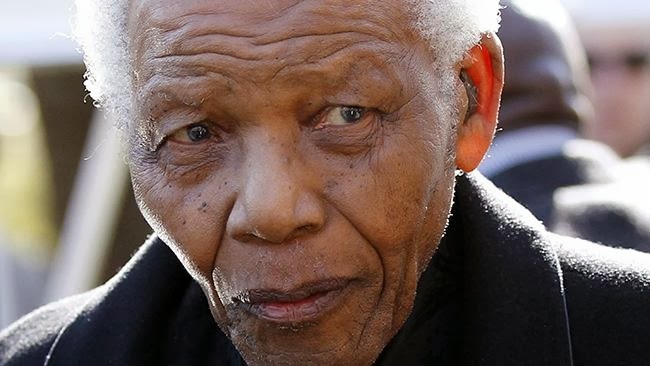
Mandela and me


I have not offered any personal reflections on the death of Nelson Mandela last week, in part because, like so many people around the world, the past few days have involved a period of self-reflection in which I have tried to understand why he had such a hold over me. I think now I have a better understanding of why this inevitable death has struck me, and many other comrades, so hard.

I never met Mandela. However, all the friends that I know who did meet Mandela share a remarkable trait: a picture of Mandela occupies a central place in their home. For these remarkably principled activist-academics, who lived in Tanzania or Mozambique or Zimbabwe during the darkest days of apartheid, were all immensely moved by his sacrifice, his struggle, and his success.

Some in the media, reflecting on his death, have challenged this 'success'. They note the remarkable worsening of inequality in South Africa since the first democratic elections in 1994 (despite the construction of Africa's best social protection system), the high share of the population – one-third – that live in dire poverty, the absurdly high levels of unemployment amongst the black working class, even though all the while a small share of the black population has become fabulously, even obscenely, wealthy. The figure of Cyril Ramaphosa looms large here: in the 1980s, as leader of the National Union of Miners, Ramaphosa was an inspirational leader in the struggle against apartheid, both in South Africa and outside it. I personally felt it. Now he is a very wealthy possible future president, heavily invested in the Marikana mine, where 34 striking workers were shot dead last year. For many of us involved in the struggle against apartheid, the Marikana massacre was a trip back to the future: where the heavy hand of a ruthless state was once again violently repressing black workers, with the key difference that this time the ruthless state now was run by the African National Congress rather than the National Party of the unrepentant Pik Botha (famously caricartured on Spitting Image as saying 'Fish live in trees and eat pencils. We are bringing reform to South Africa').

For my friends of my generation, the loss that we feel with the passing of Mandela is rooted in something very real: he was a great anti-imperialist leader of a national liberation struggle who stands apart because he succeeded in what he set out to do. Samora Machel, Thomas Sankara, Maurice Bishop – they are long since dead, largely forgotten by the wider world (but not by us!) and they all died a violent death. Robert Mugabe and Daniel Ortega are hopelessly compromised. Fidel Castro's achievements will be undone when he dies. Only Mandela, in relentlessly maintaining that the Freedom Charter was the basis by which the ANC would rule, and then keeping his promise, succeeded in what he set out to achieve, terminating a labour regime based upon racial oppression and replacing it with a vibrant, inclusive non-ethnic multiparty political democracy.

That was why we marched to Trafalgar Square every year, come what may, to hear Oliver Tambo (whose ANC offices were close to where I was living, in a then-shoddy but now gentrified part of north London) and other exiled leaders of the ANC, some of whom were our good friends, along with Trevor Huddleston and the other senior leaders of the anti-apartheid movement in the United Kingdom, which was vibrant and alive and joyous. During the 1980s it was as if a family was coming together to surround the South African Embassy to demand an end to apartheid, and to celebrate the community that was the left in the UK in the 1980s: anti-apartheid, to be sure, but also the Campaign for Nuclear Disarmament, miner support groups, the left of the Labour Party, Trotskyists, liberals, Eurocommunists, environmentalists, gay activists, and more. Margaret Thatcher denounced us as 'the enemy within', and we took to wearing badges that proclaimed that we were the enemy within. I recall in 1986 when we were organizing a 40 mile bike ride to raise money for an ANC school in Tanzania; I had not planned to actually ride, but at the last minute decided to do so, on a glorious day, arriving in Luton to a reception at the local working men's club where we were made to feel so welcome, by total strangers, united only in our denunciation of apartheid. Or a dinner in Winnipeg in 1987 to raise money for the ANC, when one of Winnipeg's small African community rose to say that until South Africa was free none of us would be free.

Mandela may have been a radical, but he was also a pragmatist who realized that his own personal world-historic role was not to build socialism in South Africa but to terminate a racially-based labour regime and ensure that the transition to majority rule and political democracy worked. He also knew what had happened in other societies where minorities had violently repressed majorities, and understood that for the political transition to work he personally would have to reconcile with his jailers. Much of the current celebration of his life revolves around this seemingly unique ability to accommodate, but I suspect that behind his steely exterior he hated what he had to do, as his life and, notwithstanding his marriage to the great Graça Machel at the age of 80, his family had been ripped from him, and he only relentlessly pursued reconciliation because he believed he had to do it. Which, for those of us who remember the state-fomented violence in KwaZulu Natal with Inkatha, was correct. That could have been the future – but it was not.

I must confess – in 1993 and 94 and 95 I was a pessimist. When Chris Hani was assassinated prior to the first democratic elections, and in light of the violence in KawZulu Natal, I thought the country would descend into a bloodbath, the inequities and injustice were so great. That it did not was due to the moral force of Mandela, as well as his uncanny political acumen. What Mandela lost, though, with Hani's assassination, was the next step of the transition: if he had been president, Hani would, in my view, have overseen the dismantling of the economics of apartheid, which to this day remain too largely in place.

In 1990 when Mandela was released I was on the prairies; my stepfather had suddenly died two days before, we were arranging his cremation, but we still had to watch Mandela walk out, fist aloft, wondering what he was like, what would he say, this man for which whose release we had campaigned for a very long time indeed. Margaret Thatcher still thought he was a terrorist, the US still had him on their terror watch list, and don't start me going on about Chester Crocker or David Cameron or Stephen Harper. Mandela's release was not due to governments in the West, no matter what they are saying today as his funeral approaches. It was due to resistance in the townships and in the mines that was supported by the sanctions and divestment movement, which was a movement of people of which we were a part. But it was more, and this cannot be forgotten. It was not just the economic contradictions of an unprofitable racially-based labour regime that made the fall of apartheid inevitable by 1990. No: Victoria Brittain's reports in late 1987 and early 1998 about the ongoing battle of Cuito Cuanavale, in Angola, made it very clear.  The Angolans were facing defeat at the hands of the invading South African Defence Forces, and, in their desperation, they called on Cuba.  Fidel Castro responded by sending thousands of troops, who defeated the South Africans in a series of set encounters and demonstrated to the apartheid regime that military defeat was inevitable.


So Mandela's triumph was far from inevitable, and that is the single most important lesson that I carry forward with his passing. Nelson Mandela showed us that immense change is possible, but it takes a movement to build it. He showed us that processes of change must be very carefully and judiciously navigated, and that it does require, at times, knowing when to compromise and when not to compromise. He also showed us, in his post-retirement campaign work around HIV/AIDS, that the process of change is still not finished: “Poverty is not natural. It is man-made” and “while poverty persists, there is no true freedom”. Mandela played a critical role in ending one of the most putrid labour regimes of the 20th century, rooted as it was in racial oppression. The best way of living up to his ideals will be to carry his struggle forward, build a movement, and end systems of economic exploitation, in our homes, in our communities, in our countries, and across the face of world. To paraphrase the man himself, sometimes it falls on a generation to be great, and we can be that great generation.

Wednesday, October 9, 2013

Wealth inequality in the UK

From www.inequalitybriefing.org, an excellent visual overview of the state of inequality in the UK today.

Monday, October 7, 2013

Unpaid care work, poverty and women's human rights

ActionAid International, the Institute of Development Studies at the University of Sussex in the United Kingdom, and Oxfam are facilitating the launch today of a report on unpaid care work and women's poverty by the UN Special Rapporteur on Extreme Poverty and Human Rights. The Report will be presented to the UN later in the month.

A video overview of the Report highlights its key messages, which has been a focal part of my research and advisory activity for decades:

Monday, July 15, 2013

Making sense of the (US) Farm Bill: an infographic

This is without doubt the best explanation of the history, structure and impact of successive US Farm Bills that I have seen.  Clear, accessible and powerful, this is a must-view for everyone concerned with the corporate food regime.


Friday, July 12, 2013

Mel's prime beef

Mel's Prime Beef are eight three-minute clips on what is wrong with Ontario's food system.  Episode 6 is typical -- it goes for the jugular in accessibly explaining how markets fail farmers and consumers.  All eight are worth watching.