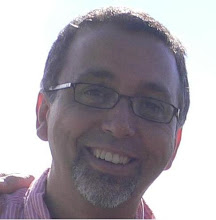
It has been my unfortunate experience, too many times in my life, to be judged by my name, my (apparent) ethnicity, and even (less apparently) the colour of my skin. I rarely think of myself in those terms, although the reality of my origins are an important part of who I am, of what I have chosen to do, and of how I have chosen to do it. Those origins help explain why, for me, the election last night of Barack Obama as the 44th President of the United States was very emotional.
I have reached the time in my life when I am aware that I have lived through history. I recall, vaguely, Dr Martin Luther King. I recall, vividly, when he was assassinated. I recall, too, from a very early age, being aware of apartheid (I had a special loathing for John Vorster), and of the white-minority regime in what is now Zimbabwe, led by Ian Smith. I remember being aware of the fact that while I was in my teens in some parts of the world if I had wanted to go out with someone who was white it would have been against the law--just as it would have been for my parents if they had lived in another country. Indeed, one of the reasons that my parents opted to immigrate to Canada was because of the history of segregation in the US (along with the ongoing Vietnam War). I remember the Soweto uprising, the horrors of the South African military gunning down schoolchildren, but also the acute knowledge that had I been living in South Africa at the time I would have been told the places where I could live, just like those living in Soweto. I remember the violence in the northern US around school busing and the efforts--sometimes for better, sometimes for worse--to integrate schools. I, of course, marched--and marched!!--and marched!!!--for the release of Nelson Mandela, and consider myself extremely fortunate to have met, albeit briefly, Oliver Tambo. I remember when Nelson Mandela finally walked free: the world stopped, and marveled. Walls indeed can come tumbling down, and the impossible is possible.
This is how I feel about the election of Barack Obama. In the global struggle for dignity, equality and social justice, we as humanity have taken a tremendous step forward. By electing a young African-American from an impoverished single-parent background to replace a deeply unpopular plutocrat from an aging political dynasty, the voters of the United States have struck a blow for equality for all of us. It is an event that will reverberate throughout this century. As I said to my son yesterday, one day someone will ask him: 'Where were you when Barack Obama was elected?'
Barack Obama is not capable of fulfilling the tremendous aspirations that the world has placed on his shoulders. For many--especially those energized by political advocacy for the first time--there will be, in all likelihood, a moment of near-transcendental disappointment, when they come to the realization that, in the cold light of day, Barack Obama is an American politician. For Obama is not going to fundamentally transform American society, let alone global society. This was never part of his political agenda. He is going to govern the United States from the political center, very competently, but also very pragmatically. The evidence for this is demonstrated by his already well-established transition team, and the host of economic advisers that he has surrounded himself with. As President, then, he will resemble, somewhat ironically, a more decent, more efficient, and more effective version of former US President Bill Clinton.
However: Barack Obama will not forget that his grandmother lives in a rural village in Kenya and lacks both electricity and clean water. He will not forget that he went to an Islamic school in Indonesia and had a lot of friends there. He will not forget that it was social provisioning and public support that allowed him to realize that his aspirations were achievable. He will not forget the empty lives that he saw while working on the South Side of Chicago. Barack Obama will, within the constraints of the political economy within which he is enmeshed, try and make a difference; the extent to which he actually succeeds remains to be seen, for the constraints of the US political economy are indeed strong, especially now that US finance capital is in crisis.
So, while the election of Barack Obama is an event that could and should bring both joy and hope to billions of people around the world, the world has not been transformed by his election. Rather, his election brings the possibility of transformation that little bit closer. It is a transformation that will--and must--come. This morning, more than yesterday morning, there is a possibility of hope.
In Age of Extremes the great British historian Eric Hobsbawm accurately described the 20th century as being 'short', having lasted from 1917 to 1991, the life of the Soviet Union and the world that it ushered in. As the great British comic Eddie Izzard said last night, '4 November 2008 is the first day of the 21st century.'
Wednesday, November 5, 2008


Monday, October 27, 2008
how do you feel about human rights?
Here in Canada the discourse of human rights is ever-present. My own University has a senior management appointment that has the specific task of ensuring that people's human rights are respected. People up and down the country expect that their human rights will be observed. Yet Canada's record on human rights is not what it appears. The 'war on terror' has produced several significant cases of Canadian complicity in quite profound human rights abuses. To my mind, however, none is more damning than that of Omar Khadr.
Born in Ottawa, Omar Khadr was captured in Afghanistan by U.S. forces on 27 July 2002, having been moved to Afghanistan by his family in 1996. He was accused of killing a U.S. soldier, and, following his capture, was transferred to Guantananamo Bay in Cuba. He has been there ever since.
Omar Khadr must define one's attitude to human rights. This is the case for 2 reasons. First, because Khadr was only 15 years old when he was captured by U.S. forces (having been shot 3 times): Khadr was taken to Afghanistan by his family when he was 11, and thus had no say in the matter. Second, Khadr comes from a family that quite openly proclaims their support for anti-Western Islamist fundamentalism, and thus falls within a category that many people would find deeply disagreeable.
The key question in Omar Khadr's case is whether a minor can be held responsible for their supposed actions. The U.S. government thinks so; it argues that as Khadr turned 16 in Bagram base in Afghanistan, after his capture, he can be treated as an adult. As a consequence, he has been treated to the standard techniques used by the U.S. military in dealing with 'terrorists'. The digital footage of Khadr's interrogation is pretty harrowing. He comes across as a frightened boy that is clearly out of his depth with the circumstances that he is facing. From this footage, there can be little doubt that by any stretch of the imagination Khadr has been fairly systematically physically abused at Guantananamo. Moreover, there can also be little doubt that Canadians that visited Khadr in Guantananamo saw the evidence of abuse and did nothing about it.
Omar Khadr is the last citizen of a Northern country to be held at Guantananamo. He is still there because the Canadian government's position on Omar Khadr is that he has to go through the 'legal' processes put in place by the U.S. government. The fact that it has been 3 years since he was charged and that his 'trial' (under a format that has been globally condemned) has still not begun however makes one wonder how meaningful are these processes. Moreover, if found guilty, he faces life in prison. Khadr is now 22.
Imagine: a kid is indoctrinated by his family. He is shot. He is abused while in custody. He spends almost a third of his short life in a legal limbo and faces the prospect of spending the rest of his life in prison. I don't know Omar Khadr, and I don't know for a fact what he has or has not done. However: what he has or has not done is irrelevant. Omar Khadr's fundamental human rights have been systematically abused from the time he was a small boy.
Anyone who claims to believe in human rights and who does not support the immediate return of Omar Khadr to Canada is a hypocrite.
Born in Ottawa, Omar Khadr was captured in Afghanistan by U.S. forces on 27 July 2002, having been moved to Afghanistan by his family in 1996. He was accused of killing a U.S. soldier, and, following his capture, was transferred to Guantananamo Bay in Cuba. He has been there ever since.
Omar Khadr must define one's attitude to human rights. This is the case for 2 reasons. First, because Khadr was only 15 years old when he was captured by U.S. forces (having been shot 3 times): Khadr was taken to Afghanistan by his family when he was 11, and thus had no say in the matter. Second, Khadr comes from a family that quite openly proclaims their support for anti-Western Islamist fundamentalism, and thus falls within a category that many people would find deeply disagreeable.
The key question in Omar Khadr's case is whether a minor can be held responsible for their supposed actions. The U.S. government thinks so; it argues that as Khadr turned 16 in Bagram base in Afghanistan, after his capture, he can be treated as an adult. As a consequence, he has been treated to the standard techniques used by the U.S. military in dealing with 'terrorists'. The digital footage of Khadr's interrogation is pretty harrowing. He comes across as a frightened boy that is clearly out of his depth with the circumstances that he is facing. From this footage, there can be little doubt that by any stretch of the imagination Khadr has been fairly systematically physically abused at Guantananamo. Moreover, there can also be little doubt that Canadians that visited Khadr in Guantananamo saw the evidence of abuse and did nothing about it.
Omar Khadr is the last citizen of a Northern country to be held at Guantananamo. He is still there because the Canadian government's position on Omar Khadr is that he has to go through the 'legal' processes put in place by the U.S. government. The fact that it has been 3 years since he was charged and that his 'trial' (under a format that has been globally condemned) has still not begun however makes one wonder how meaningful are these processes. Moreover, if found guilty, he faces life in prison. Khadr is now 22.
Imagine: a kid is indoctrinated by his family. He is shot. He is abused while in custody. He spends almost a third of his short life in a legal limbo and faces the prospect of spending the rest of his life in prison. I don't know Omar Khadr, and I don't know for a fact what he has or has not done. However: what he has or has not done is irrelevant. Omar Khadr's fundamental human rights have been systematically abused from the time he was a small boy.
Anyone who claims to believe in human rights and who does not support the immediate return of Omar Khadr to Canada is a hypocrite.
Monday, October 20, 2008
dead economists for new times
It really is quite remarkable who the financial and political elite have turned to in order to understand the ongoing crisis. Two economists stand out: John Maynard Keynes and Karl Marx.
As my good friend Ardeshir Sepehri of the University of Manitoba pointed out, in order to understand the times, one would do very well to read Chapter 12 of Keynes' General Theory of Employment, Interest and Money, written in 1936. Indeed, as Keynes wrote in 1933, in the absence of state intervention to save capitalism from its tendency towards crisis, one could expect
'the progressive breakdown of the existing structure of contract and instruments of indebtedness, accompanied by the utter discredit of orthodox leadership in finance and government, with what ultimate outcome we cannot predict'.
The U.S. government, and in particular Treasury Secretary Hank Paulson, along with the U.K. Prime Minister, Gordon Brown, have rediscovered the virtues of Keynesianism after being strongly involved in the deregulation that got the world into this mess in the first place.
French President Nicolas Sarkozy has been doing slightly different reading, stating that 'we need to found a new capitalism, based on values that put finance at the service of companies and citizens'. He reached this conclusion apparently reading Das Kapital volume 1, which some people spotted him reading last week.
Marx understood the mysteries of finance, writing
'To the possessor of money capital, the process of production appears merely as an unavoidable intermediate link, as a necessary evil for the sake of moneymaking. All nations with a capitalist mode of production are therefore seized periodically by a feverish attempt to make money without the intervention of the process of production'.
We have been so seized! I suspect that these two political economists will be read a bit more carefully in the next few months than they have been in the last few decades. At stake: the need to end the de-politicization of money, which has been underway for 60 years, and which has allowed, in an ever increasing way, for government and finance to become increasingly separated. Although this de-politicization took place in the name of Keynes, he would never have subscribed to it; and, of course, Marx would only have seen it as the logical outcome of an increasingly irrational economic system.
As my good friend Ardeshir Sepehri of the University of Manitoba pointed out, in order to understand the times, one would do very well to read Chapter 12 of Keynes' General Theory of Employment, Interest and Money, written in 1936. Indeed, as Keynes wrote in 1933, in the absence of state intervention to save capitalism from its tendency towards crisis, one could expect
'the progressive breakdown of the existing structure of contract and instruments of indebtedness, accompanied by the utter discredit of orthodox leadership in finance and government, with what ultimate outcome we cannot predict'.
The U.S. government, and in particular Treasury Secretary Hank Paulson, along with the U.K. Prime Minister, Gordon Brown, have rediscovered the virtues of Keynesianism after being strongly involved in the deregulation that got the world into this mess in the first place.
French President Nicolas Sarkozy has been doing slightly different reading, stating that 'we need to found a new capitalism, based on values that put finance at the service of companies and citizens'. He reached this conclusion apparently reading Das Kapital volume 1, which some people spotted him reading last week.
Marx understood the mysteries of finance, writing
'To the possessor of money capital, the process of production appears merely as an unavoidable intermediate link, as a necessary evil for the sake of moneymaking. All nations with a capitalist mode of production are therefore seized periodically by a feverish attempt to make money without the intervention of the process of production'.
We have been so seized! I suspect that these two political economists will be read a bit more carefully in the next few months than they have been in the last few decades. At stake: the need to end the de-politicization of money, which has been underway for 60 years, and which has allowed, in an ever increasing way, for government and finance to become increasingly separated. Although this de-politicization took place in the name of Keynes, he would never have subscribed to it; and, of course, Marx would only have seen it as the logical outcome of an increasingly irrational economic system.
Friday, October 17, 2008
is neoliberalism finished?
Readers of this weblog will know that the global financial crisis of the past 3 weeks has, in my view, fundamentally changed the landscape of global capitalism. A world that was effectively born on 4 November 1980, with the election of Ronald Reagan as U.S. President (I was in San Francisco at the time) has ended, and a period of untrammelled global neoliberalism will have to change if global finance capital is to survive.
How much has the world changed? Consider this. In the United Kingdom, where, of course, London is the second most important financial center in the world, the Royal Bank of Scotland, one of Britain's most important financial institutions, will soon be 57 per cent owned by the British state. It is also expected that the British state will own up to 40 per cent of the newly merged (and so far unnamed) Lloyds-TSB-Halifx Bank of Scotland combination, which is also one of the largest and most important British financial institutions. The British state already owns Northern Rock and Bradford and Bingley, specialist mortgage lenders that overreached their market niche and paid the price. In other words: the British state, which was one global center of the de-regulating neoliberal project, now is steering some of the most important components of British finance capital. Consider also another paragon of neoliberalism (indeed, as a consequence of the Wassenaar Accord, possibly the earlist adopter of neoliberalism in the North: the Netherlands' state owns the Dutch rump of ABN-AMRO and Fortis Nederland, two of the three biggest banks in the Netherlands. Again: the Dutch state is steering the most important components of Dutch finance capital. Examples of this degree of state intervention in finance capital abound in the North: in Germany, in Belgium, in Denmark, in Ireland, in Italy, in Iceland and, in all places, in Switzerland. The most significant intervention, of course, is the one that I have saved for last: the U.S. state owns 79.9 per cent of AIG, which at one time was the largest insurance company in the U.S., and as a consequence of the policy moves made by the U.S. Treasury on Monday will soon own significant shares in nine major U.S. financial institutions, including Bank of America (with which one-half of all U.S. households does some kind of banking), Citigroup, Wells Fargo, Morgan Stanley, Goldman Sachs (former firm of the U.S. Treasury Secretary), J.P. Morgan and Merrill Lynch. This is a consequence of their agreement to take part in both the Treasury’s ‘voluntary’ capital purchase programme--which was nothing of the sort, which U.S. finance given no choice by the state--and the Federal Deposit Insurance Corporation’s guarantee programme of senior bank debt and assorted deposit liabilities.
The world has changed; the state has acted to save capitalism, just as it did in the 1930s, and where this will lead is very difficult to know.
How much has the world changed? Consider this. In the United Kingdom, where, of course, London is the second most important financial center in the world, the Royal Bank of Scotland, one of Britain's most important financial institutions, will soon be 57 per cent owned by the British state. It is also expected that the British state will own up to 40 per cent of the newly merged (and so far unnamed) Lloyds-TSB-Halifx Bank of Scotland combination, which is also one of the largest and most important British financial institutions. The British state already owns Northern Rock and Bradford and Bingley, specialist mortgage lenders that overreached their market niche and paid the price. In other words: the British state, which was one global center of the de-regulating neoliberal project, now is steering some of the most important components of British finance capital. Consider also another paragon of neoliberalism (indeed, as a consequence of the Wassenaar Accord, possibly the earlist adopter of neoliberalism in the North: the Netherlands' state owns the Dutch rump of ABN-AMRO and Fortis Nederland, two of the three biggest banks in the Netherlands. Again: the Dutch state is steering the most important components of Dutch finance capital. Examples of this degree of state intervention in finance capital abound in the North: in Germany, in Belgium, in Denmark, in Ireland, in Italy, in Iceland and, in all places, in Switzerland. The most significant intervention, of course, is the one that I have saved for last: the U.S. state owns 79.9 per cent of AIG, which at one time was the largest insurance company in the U.S., and as a consequence of the policy moves made by the U.S. Treasury on Monday will soon own significant shares in nine major U.S. financial institutions, including Bank of America (with which one-half of all U.S. households does some kind of banking), Citigroup, Wells Fargo, Morgan Stanley, Goldman Sachs (former firm of the U.S. Treasury Secretary), J.P. Morgan and Merrill Lynch. This is a consequence of their agreement to take part in both the Treasury’s ‘voluntary’ capital purchase programme--which was nothing of the sort, which U.S. finance given no choice by the state--and the Federal Deposit Insurance Corporation’s guarantee programme of senior bank debt and assorted deposit liabilities.
The world has changed; the state has acted to save capitalism, just as it did in the 1930s, and where this will lead is very difficult to know.
Thursday, October 16, 2008
some 3 weeks!
The past 3 weeks have been a period of intense scholarly activity for me; a period that has deeply reminded me why I do the work that I do. Indeed, I would go so far as to say that they have been the best 3 weeks, professionally speaking, since I returned to Canada after an effective absence of 25 years. Set against the backdrop of a deepening global financial crisis, and the effective collapse of neo-liberalism, I have been fortunate to be able to engage with a number of leading intellectuals in the field of international development, and this has left me remarkably refreshed.
Three weeks ago I attended the inaugural Development Studies Seminar at York University, organized by my old friend and colleague Sharada Srinivasan. My former colleague at the Institute of Social Studies, Jan Nederveen Pieterse, delivered an outstanding talk on transnational cultures and 'deep culture'. Now at the University of Illinois-Urbana Champaign, Pieterse is a major international figure in post-development thinking, and I must confess that, in this light, I was surprised by how few academics from York University attended his seminar.
Pieterse argued that throughout history relations between cultures has paid attention to difference, rather than the commonalities that he terms deep culture. However, increasingly global communities now articulate their differences in terms of a common global transnational culture, which allows a shared deep culture to come to the foreground, creating, in effect, a global multiculture that balances sedantary cultures, non-place bound culture, and increasingly mobile flexible acculturation. Pieterse reflected afterwards on the place of violent conflict in the processes he described, with violence seen as a means of locating oneself within a transnational culture. Pieterse's seminar was very, very good; and later in the evening we enjoyed our first meal together in a decade, reflecting upon life in the North American academic environment, changes in European society, and his reflections upon U.S. society, as well as, of course, his current thinking on international development issues.
One week later I had dinner with Diane Elson, Professor of Sociology at the University of Essex and one of the world's outstanding feminist economists. The former Chief Economist for the United Nations Development Fund for Women (Unifem), I am privileged to be able to call Elson a friend (I hope!), for along with a sharp and critical intellect she has a remarkably inclusive and open approach to intellectual engagement (something that she shares with another great feminist economist, Nancy Folbre). We had no agenda, per se, but nonetheless had a lively discussion on the role of the International Monetary Fund in Africa, on the Gender Team within the United Nations Development Programme, and on (again!) the North American academic environment. Elson has been actively engaged recently in a major, and important, intervention in international development studies, the creation of a master's degree in gender and economics at Makere University in Uganda, and this we also discussed.
Five days later the Department of International Development Studies at Trent University hosted the first David Morrison Lecture in International Development, and Professor James C. Scott of Yale University, whom I have read for decades but whom I had never met, delivered an outstanding address on globalization and the relationship between the 'vernacular' and the 'official'. Scott described how the state seeks to standardize society by creating national systems of taxation, legal codes and land rights, language and names, and even weights and measures, and that this follows a logic of control, manipulation and management over populations. He then went on to argue that the 'Washington Consensus' represented an international effort led by the International Monetary Fund, the World Bank and the World Trade Organization to standardize the world’s economies even though it was itself a vernacular approach of 19th century North Atlantic world. Hence, globalization is a vernacular that is presented as a universal.
Following Scott's lecture there was a very good open discussion, and this discussion continued amongst colleagues in the Department into the second U.S. presidential debate, and indeed on into the next day. Along the way I learned a great deal about Southeast Asia, the United States, and Scott's own intellectual development.
Two days after the Scott lecture I attended the University of Manitoba's Global Political Economy Group conference on the world food crisis. The Keynote Speaker at the conference was Professor Utsa Patnaik of Jawaharlal Nehru University in New Delhi, India, one of the world's most formidable political economists. I had not seen Professor Patnaik in more than 14 years, and she delivered an important address on the contemporary food crisis, arguing that it witnessed the articulation of 3 contemporary contradictions: of food versus feed, of food versus exports, and of food versus fuel. She demonstrated that the structural causes of the food crisis lie in the increasing indirect demand of Northern consumers for grain, in the form of the meat that they consume. She demonstrated the fallacy of free trade and comparative advantage, explaining how the drive to export, imposed as a consequence of the 'Washington Consensus', was predicated upon the compression of demand in the South, a compression that directly contributed to rising poverty and inequality. She also explored the geopolitical ramifications of the quest for agrofuels.
The excellence of this lecture paved the way for a great conference; I was particularly moved by Fred Tate of the National Farmers' Union, who explained how corporate agribusiness was driving farmers out of farming. The conference also allowed me to catch up with old friends from the Department of Economics at the University of Manitoba, Canada's outstanding heterodox economics department: John Loxley, Robert Chernomas, Ardeshir Sepehri and Fletcher Baragar. Much of our time was spent discussing the financial crisis, as last weekend was the watershed of it, with the Canadian dollar collapsing on Friday along with global stock markets before UK Prime Minister Gordon Brown saved the day by beginning a process in which national governments around the world assumed partial ownership of a number of major banks, in order to recapitalize them and thus inject liquidity into the global financial system.
As I have also been teaching my full load at Trent University during this period, it has been a very tiring, but also quite exhilirating, time. I have learned a lot over the last 3 weeks, and am extremely fortunate to be in a position where I can continue to learn, from new acquaintances, old colleagues, students and friends.
Three weeks ago I attended the inaugural Development Studies Seminar at York University, organized by my old friend and colleague Sharada Srinivasan. My former colleague at the Institute of Social Studies, Jan Nederveen Pieterse, delivered an outstanding talk on transnational cultures and 'deep culture'. Now at the University of Illinois-Urbana Champaign, Pieterse is a major international figure in post-development thinking, and I must confess that, in this light, I was surprised by how few academics from York University attended his seminar.
Pieterse argued that throughout history relations between cultures has paid attention to difference, rather than the commonalities that he terms deep culture. However, increasingly global communities now articulate their differences in terms of a common global transnational culture, which allows a shared deep culture to come to the foreground, creating, in effect, a global multiculture that balances sedantary cultures, non-place bound culture, and increasingly mobile flexible acculturation. Pieterse reflected afterwards on the place of violent conflict in the processes he described, with violence seen as a means of locating oneself within a transnational culture. Pieterse's seminar was very, very good; and later in the evening we enjoyed our first meal together in a decade, reflecting upon life in the North American academic environment, changes in European society, and his reflections upon U.S. society, as well as, of course, his current thinking on international development issues.
One week later I had dinner with Diane Elson, Professor of Sociology at the University of Essex and one of the world's outstanding feminist economists. The former Chief Economist for the United Nations Development Fund for Women (Unifem), I am privileged to be able to call Elson a friend (I hope!), for along with a sharp and critical intellect she has a remarkably inclusive and open approach to intellectual engagement (something that she shares with another great feminist economist, Nancy Folbre). We had no agenda, per se, but nonetheless had a lively discussion on the role of the International Monetary Fund in Africa, on the Gender Team within the United Nations Development Programme, and on (again!) the North American academic environment. Elson has been actively engaged recently in a major, and important, intervention in international development studies, the creation of a master's degree in gender and economics at Makere University in Uganda, and this we also discussed.
Five days later the Department of International Development Studies at Trent University hosted the first David Morrison Lecture in International Development, and Professor James C. Scott of Yale University, whom I have read for decades but whom I had never met, delivered an outstanding address on globalization and the relationship between the 'vernacular' and the 'official'. Scott described how the state seeks to standardize society by creating national systems of taxation, legal codes and land rights, language and names, and even weights and measures, and that this follows a logic of control, manipulation and management over populations. He then went on to argue that the 'Washington Consensus' represented an international effort led by the International Monetary Fund, the World Bank and the World Trade Organization to standardize the world’s economies even though it was itself a vernacular approach of 19th century North Atlantic world. Hence, globalization is a vernacular that is presented as a universal.
Following Scott's lecture there was a very good open discussion, and this discussion continued amongst colleagues in the Department into the second U.S. presidential debate, and indeed on into the next day. Along the way I learned a great deal about Southeast Asia, the United States, and Scott's own intellectual development.
Two days after the Scott lecture I attended the University of Manitoba's Global Political Economy Group conference on the world food crisis. The Keynote Speaker at the conference was Professor Utsa Patnaik of Jawaharlal Nehru University in New Delhi, India, one of the world's most formidable political economists. I had not seen Professor Patnaik in more than 14 years, and she delivered an important address on the contemporary food crisis, arguing that it witnessed the articulation of 3 contemporary contradictions: of food versus feed, of food versus exports, and of food versus fuel. She demonstrated that the structural causes of the food crisis lie in the increasing indirect demand of Northern consumers for grain, in the form of the meat that they consume. She demonstrated the fallacy of free trade and comparative advantage, explaining how the drive to export, imposed as a consequence of the 'Washington Consensus', was predicated upon the compression of demand in the South, a compression that directly contributed to rising poverty and inequality. She also explored the geopolitical ramifications of the quest for agrofuels.
The excellence of this lecture paved the way for a great conference; I was particularly moved by Fred Tate of the National Farmers' Union, who explained how corporate agribusiness was driving farmers out of farming. The conference also allowed me to catch up with old friends from the Department of Economics at the University of Manitoba, Canada's outstanding heterodox economics department: John Loxley, Robert Chernomas, Ardeshir Sepehri and Fletcher Baragar. Much of our time was spent discussing the financial crisis, as last weekend was the watershed of it, with the Canadian dollar collapsing on Friday along with global stock markets before UK Prime Minister Gordon Brown saved the day by beginning a process in which national governments around the world assumed partial ownership of a number of major banks, in order to recapitalize them and thus inject liquidity into the global financial system.
As I have also been teaching my full load at Trent University during this period, it has been a very tiring, but also quite exhilirating, time. I have learned a lot over the last 3 weeks, and am extremely fortunate to be in a position where I can continue to learn, from new acquaintances, old colleagues, students and friends.
Monday, September 22, 2008
activist burnout
People who study or work in international development studies often tend to start from an action-oriented, activist and advocacy perspective. Yet later, they can appear to either become more bureaucratized, or disappear from the scene altogether. There are, in my view, 3 simple rules to trying to sustain an activist life:
1. keep your goals small and feasible, not large and impossible;
2. make sure that you have a life outside of your activism;
3. understand that while your choices matter, being an activist is not the same as denying yourself some of the elementary pleasures that this short life has to offer.
Keep activism grounded in the real world, and one's own real world needs, is how to avoid burnout.
1. keep your goals small and feasible, not large and impossible;
2. make sure that you have a life outside of your activism;
3. understand that while your choices matter, being an activist is not the same as denying yourself some of the elementary pleasures that this short life has to offer.
Keep activism grounded in the real world, and one's own real world needs, is how to avoid burnout.
Sunday, September 21, 2008
regime change for global finance capital
My undergraduate students commonly seem to think that the world doesn't change very much. Yet last week, between 14 September and 18 September, the world changed in quite dramatic ways. The era of free market fundamentalism, ushered in globally with the election of Ronald Reagan on 4 November 1980 and the continuing tenure of then-US Federal Reserve Chairman Paul Volcker at the time, has, without doubt, come to an end. It was, as Mohamed El-Erian, chief executive of the bond fund manager Pimco, said in the Financial Times, 'regime change'. Nouriel Roubini of New York University put it this way in The Globe and Mail: 'this financial crisis signals the beginning of the decline of the American empire'. To adapt the words of Gil Scott Heron to fit the times, the revolution was televised on MSNBC; but many people missed it.
The origins of the events last week have been well-rehearsed in previous entries on this weblog. The US financial crisis has multiple origins, but two dates stand out. Eight years ago Alan Greenspan, the former Chairman of the US Federal Reserve, argued that over-the-counter (OTC) derivatives, the contracts between banks, insurance companies and other non-bank financial firms, should not be subject to US government regulation. As a consequence, OTC derivatives have not been subject to oversight by the Commodities Futures Trading Commission. A year later, in 2001, the same Alan Greenspan started cutting US interest rates in the wake of the September 11 attacks. Greenspan's role in these two events, in that they laid the groundwork for the creation of a huge speculative financial bubble amongst global finance capital searching for profits and households searching for livelihood security, has meant that the man who was once the hero of global finance capital is now a man whose reputation stands, at long last, in tatters.
As US interest rates went lower, US mortgage providers started to look for new markets for their products: and the principal market turned out to be cheap mortgages that could be offered under the low-interest rate regime to people that, for various reasons, could never before in their life have thought about owning a home. The result: too many Americans started buying homes (and, through re-mortgaging, other big purchases like cars) with loans that they could not afford. These mortgage providers then 'bundled' these mortgages together, and sold them to investment banks, who started to repackage the mortgages into a set of increasingly arcane products that could be sold to investors such as non-bank financial institutions looking for 'safe' products with a better rate of return than that offered by 'conventional' investment products such as US government bonds.
In doing this, the investment banks started entering into a world in which they had little experience. Moreover, in order to continue doing this business, investment banks and other non-bank financial companies (like American Insurance Group [AIG]), who do not have deposits that they can tap into as an inexpensive source of money, depended upon continually securing short-term loans from other financial institutions, which they would secure by using the assets that they held--the 'bundled' mortgages. Investment banks and non-bank financial institutions were thus borrowing against assets that were ultimately held by less-creditworthy consumers. In essence, the investment banks and the non-bank financial companies that bought their products were counting on home prices continuing to rise, and thus that the holders of the mortgages being able to meet their debt obligations; the financial alchemy behind the crisis sees finance capital shuffling risk like a juggler keeping balls in the air, while all the while not really understanding the complex products--and obligations--that they were peddling. Indeed, as John Gapper writes in the Financial Times, it was as if finance capital had become addicted to complexity.
The house of cards started to collapse last year, when American mortgage holders who had been paying sub-prime interest rates suddenly found out that, as a consequence of the terms and conditions of their mortgage, their interest rates ratcheted up, and they were now paying far, far more in repayments than that for which they had budgeted. They couldn't afford it; and a wave of foreclosures followed. US house prices of course started to tumble; and the investment banks and non-bank financial companies were left holding bundled complex financialmort products predicated upon bundled mortgages that no one wanted to buy. These are the 'toxic assets' that people talk about now: bad loans rooted in the decision of US mortgage providers to provide home loans for consumers that were not adequately solvent, with such loans being then converted into bonds and other securities and being traded in a way that, in effect, spread their poison throughout the financial system. As a result, finance capital increasingly had trouble securing the short-term loans that they needed to stay afloat; and thus, for many companies, a crisis of liquidity opened up, as they became unable to borrow to meet their day-to-day needs. This was the background to last week's events, a process that had been unfolding slowly for more than a year.
One irony of recent events was that the American financial system's liquidity crisis took place in a world awash with money. The excess savings of China and other Asian countries, as well as that of the petro-economies, means that globally their is lots of money sloshing about (it is very fortunate for the US that China is not prepared to sell its holdings of US government Treasury bills and bonds; were such to happen, the crisis would be infinitely worse, becoming, no doubt, one of global capitalism). However, increasingly, US investment banks and non-bank financial institutions had a difficult time accessing that money as the awareness of their toxic assets grew. Growing legions of sovereign wealth funds, who at first seemed the most likely corporate partners to solve the crisis, balked when confronted with the true extent of what was going on; hence, the Korea Development Bank walked away from Lehmann Brothers, sealing its fate. In this way, overleveraged US finance generated the foundations of an economic panic amongst global finance capital.
Last week was one of high drama. After the rescue of Fannie Mae and Freddie Mac the previous week, the US government ended up guaranteeing almost half the mortgages in the US. However, the fun really started on Sunday, when Lehmann Brothers (founded 1850) collapsed and Merrill Lynch (founded 1915) was forced to welcome being bought out by Bank of America at a fraction of the stock market value that it had been worth just weeks before. AIG then required a stringent loan of US$85 billion (with the effect that the US government owns one of the largest insurers in the world). Financial markets started to panic. On Wednesday, the 'flight to safety' was so severe that the interest rate on one-month US Treasury bills turned negative, meaning that finance capital would rather lose money holding a safe asset than invest in financial markets awash with unforeseen toxic assets. The yield on three month Treasury bills that day was 0.02 %, the lowest rate since 1941, before the entry of the US into World War Two. Global finance capital was running for cover.
On Thursday and Friday, the US Treasury had no choice: with the financial system threatening to seize up, the world's central banks pumped US$180 billion into global money markets, the US government pledged US$50 billion to guarantee money-market mutual funds, US Treasury Secretary Hank Paulson unveiled a plan to mop up toxic assets with government money, and in both the US and London the short-selling of stocks is halted. In effect, the US government has socialized the US financial system, to deal with toxic assets whose worth has been estimated to be anywhere between US$500 billion and US$1 trillion. Of course, many of these assets will be sold at a fraction of the value; nonetheless, the cost of this socialization of US finance will run into the billions of dollars. The US government acted to save American finance capital.
Perhaps of all varieties of economists a Marxist economist would understand the causes of the crisis best. US finance capital has become increasingly divorced from the real economy where goods and services are produced. As such, it is increasingly having to slice and dice ever smaller amounts of the surplus value that is produced in the real economy and then redistributed from the productive economy into the financial sector. As it has to slice and dice, it was finding ever-more esoteric ways of trying to make money on top of an asset base that was not fundamentally changing. It was, in effect, a massive Ponzi scheme, and was bound to come crashing down.
Many things are going to change for global finance capital as a consequence of the past week. No doubt other financial institutions may fail. Investment banking is, as a business, finished, and global finance will start to shift back towards using assets based in the real economy as the basis of its activity. Thus, the market for credit derivatives is also finished, for now, and if it is revived, it will be very, very different. There is also little doubt that for the next little while the ability of consumers and firms to access credit will be heavily constrained; the US government has seen its public debt increase substantially with the socialization of US finance, which suggests that increases in US interest rates will be forthcoming, with implications for economic growth in the US economy, because it is so heavily reliant on debt, and for the rest of the world, because it is so heavily reliant on the US economy.
However, the most critical outcome of this past week is that the era of free market fundamentalism, in which is was believed that the system would work best if left to its own devices, has drawn inexorably to a close in the home of capitalism, the US. If the US government believes the only way to save finance capital is to nationalize assets on a scale greater than that witnessed in Russia under Vladimir Putin, then the era of free market capitalism is finished.
We should not be surprised. This past week has highlighted the fact that in deregulated financial markets market-based outcomes are not necessarily the best for society. If they were, there would have been no need for the socialization of US finance. Those who participate in markets are often motivated by private and professional greed, and will try and do what they can get away with, even if regulatory laws are in place. The financial bubble is a clear demonstration of this greed: financiers chased their astronomical bonus payments, and households jumped at the chance to buy something valuable--their homes--that they never thought they could afford because the mortgage providers told them they could afford it. As Adam Smith said, 'people of the same trade seldom meet together, even for merriment and diversion, but the conversation ends in a conspiracy against the public'. Today, Smith might put it thus: markets cannot be trusted to work in the public interest, because they are a function of the legal and social environment within which they are created, and that environment may encourage actions that are detrimental to the public good in the pursuit of private profit. That has happened, recklessly, in the US over the past 5 years. The truth of Smith's insights have once again been revealed this past week.
The origins of the events last week have been well-rehearsed in previous entries on this weblog. The US financial crisis has multiple origins, but two dates stand out. Eight years ago Alan Greenspan, the former Chairman of the US Federal Reserve, argued that over-the-counter (OTC) derivatives, the contracts between banks, insurance companies and other non-bank financial firms, should not be subject to US government regulation. As a consequence, OTC derivatives have not been subject to oversight by the Commodities Futures Trading Commission. A year later, in 2001, the same Alan Greenspan started cutting US interest rates in the wake of the September 11 attacks. Greenspan's role in these two events, in that they laid the groundwork for the creation of a huge speculative financial bubble amongst global finance capital searching for profits and households searching for livelihood security, has meant that the man who was once the hero of global finance capital is now a man whose reputation stands, at long last, in tatters.
As US interest rates went lower, US mortgage providers started to look for new markets for their products: and the principal market turned out to be cheap mortgages that could be offered under the low-interest rate regime to people that, for various reasons, could never before in their life have thought about owning a home. The result: too many Americans started buying homes (and, through re-mortgaging, other big purchases like cars) with loans that they could not afford. These mortgage providers then 'bundled' these mortgages together, and sold them to investment banks, who started to repackage the mortgages into a set of increasingly arcane products that could be sold to investors such as non-bank financial institutions looking for 'safe' products with a better rate of return than that offered by 'conventional' investment products such as US government bonds.
In doing this, the investment banks started entering into a world in which they had little experience. Moreover, in order to continue doing this business, investment banks and other non-bank financial companies (like American Insurance Group [AIG]), who do not have deposits that they can tap into as an inexpensive source of money, depended upon continually securing short-term loans from other financial institutions, which they would secure by using the assets that they held--the 'bundled' mortgages. Investment banks and non-bank financial institutions were thus borrowing against assets that were ultimately held by less-creditworthy consumers. In essence, the investment banks and the non-bank financial companies that bought their products were counting on home prices continuing to rise, and thus that the holders of the mortgages being able to meet their debt obligations; the financial alchemy behind the crisis sees finance capital shuffling risk like a juggler keeping balls in the air, while all the while not really understanding the complex products--and obligations--that they were peddling. Indeed, as John Gapper writes in the Financial Times, it was as if finance capital had become addicted to complexity.
The house of cards started to collapse last year, when American mortgage holders who had been paying sub-prime interest rates suddenly found out that, as a consequence of the terms and conditions of their mortgage, their interest rates ratcheted up, and they were now paying far, far more in repayments than that for which they had budgeted. They couldn't afford it; and a wave of foreclosures followed. US house prices of course started to tumble; and the investment banks and non-bank financial companies were left holding bundled complex financialmort products predicated upon bundled mortgages that no one wanted to buy. These are the 'toxic assets' that people talk about now: bad loans rooted in the decision of US mortgage providers to provide home loans for consumers that were not adequately solvent, with such loans being then converted into bonds and other securities and being traded in a way that, in effect, spread their poison throughout the financial system. As a result, finance capital increasingly had trouble securing the short-term loans that they needed to stay afloat; and thus, for many companies, a crisis of liquidity opened up, as they became unable to borrow to meet their day-to-day needs. This was the background to last week's events, a process that had been unfolding slowly for more than a year.
One irony of recent events was that the American financial system's liquidity crisis took place in a world awash with money. The excess savings of China and other Asian countries, as well as that of the petro-economies, means that globally their is lots of money sloshing about (it is very fortunate for the US that China is not prepared to sell its holdings of US government Treasury bills and bonds; were such to happen, the crisis would be infinitely worse, becoming, no doubt, one of global capitalism). However, increasingly, US investment banks and non-bank financial institutions had a difficult time accessing that money as the awareness of their toxic assets grew. Growing legions of sovereign wealth funds, who at first seemed the most likely corporate partners to solve the crisis, balked when confronted with the true extent of what was going on; hence, the Korea Development Bank walked away from Lehmann Brothers, sealing its fate. In this way, overleveraged US finance generated the foundations of an economic panic amongst global finance capital.
Last week was one of high drama. After the rescue of Fannie Mae and Freddie Mac the previous week, the US government ended up guaranteeing almost half the mortgages in the US. However, the fun really started on Sunday, when Lehmann Brothers (founded 1850) collapsed and Merrill Lynch (founded 1915) was forced to welcome being bought out by Bank of America at a fraction of the stock market value that it had been worth just weeks before. AIG then required a stringent loan of US$85 billion (with the effect that the US government owns one of the largest insurers in the world). Financial markets started to panic. On Wednesday, the 'flight to safety' was so severe that the interest rate on one-month US Treasury bills turned negative, meaning that finance capital would rather lose money holding a safe asset than invest in financial markets awash with unforeseen toxic assets. The yield on three month Treasury bills that day was 0.02 %, the lowest rate since 1941, before the entry of the US into World War Two. Global finance capital was running for cover.
On Thursday and Friday, the US Treasury had no choice: with the financial system threatening to seize up, the world's central banks pumped US$180 billion into global money markets, the US government pledged US$50 billion to guarantee money-market mutual funds, US Treasury Secretary Hank Paulson unveiled a plan to mop up toxic assets with government money, and in both the US and London the short-selling of stocks is halted. In effect, the US government has socialized the US financial system, to deal with toxic assets whose worth has been estimated to be anywhere between US$500 billion and US$1 trillion. Of course, many of these assets will be sold at a fraction of the value; nonetheless, the cost of this socialization of US finance will run into the billions of dollars. The US government acted to save American finance capital.
Perhaps of all varieties of economists a Marxist economist would understand the causes of the crisis best. US finance capital has become increasingly divorced from the real economy where goods and services are produced. As such, it is increasingly having to slice and dice ever smaller amounts of the surplus value that is produced in the real economy and then redistributed from the productive economy into the financial sector. As it has to slice and dice, it was finding ever-more esoteric ways of trying to make money on top of an asset base that was not fundamentally changing. It was, in effect, a massive Ponzi scheme, and was bound to come crashing down.
Many things are going to change for global finance capital as a consequence of the past week. No doubt other financial institutions may fail. Investment banking is, as a business, finished, and global finance will start to shift back towards using assets based in the real economy as the basis of its activity. Thus, the market for credit derivatives is also finished, for now, and if it is revived, it will be very, very different. There is also little doubt that for the next little while the ability of consumers and firms to access credit will be heavily constrained; the US government has seen its public debt increase substantially with the socialization of US finance, which suggests that increases in US interest rates will be forthcoming, with implications for economic growth in the US economy, because it is so heavily reliant on debt, and for the rest of the world, because it is so heavily reliant on the US economy.
However, the most critical outcome of this past week is that the era of free market fundamentalism, in which is was believed that the system would work best if left to its own devices, has drawn inexorably to a close in the home of capitalism, the US. If the US government believes the only way to save finance capital is to nationalize assets on a scale greater than that witnessed in Russia under Vladimir Putin, then the era of free market capitalism is finished.
We should not be surprised. This past week has highlighted the fact that in deregulated financial markets market-based outcomes are not necessarily the best for society. If they were, there would have been no need for the socialization of US finance. Those who participate in markets are often motivated by private and professional greed, and will try and do what they can get away with, even if regulatory laws are in place. The financial bubble is a clear demonstration of this greed: financiers chased their astronomical bonus payments, and households jumped at the chance to buy something valuable--their homes--that they never thought they could afford because the mortgage providers told them they could afford it. As Adam Smith said, 'people of the same trade seldom meet together, even for merriment and diversion, but the conversation ends in a conspiracy against the public'. Today, Smith might put it thus: markets cannot be trusted to work in the public interest, because they are a function of the legal and social environment within which they are created, and that environment may encourage actions that are detrimental to the public good in the pursuit of private profit. That has happened, recklessly, in the US over the past 5 years. The truth of Smith's insights have once again been revealed this past week.
Subscribe to:
Posts (Atom)